
Tell a phone-bill charge from a bank transfer
PayID uses an identifier such as a mobile number or email to route a bank payment, not a charge to a phone account.

What “Pay by Phone” Means—and What PayID Actually Does
“Pay by phone” can describe two different payment ideas. One is a charge made through a mobile carrier, which would appear on a phone bill or be deducted from prepaid phone credit. The other is a payment you authorise in a mobile banking app. PayID belongs to the second category: it is not a charge to your phone account.
The distinction matters because seeing the word “phone” in a payment description does not tell you where the money comes from. With carrier billing, the phone provider is involved in collecting the charge. With PayID, the payment is made from a bank account through the banking system. Your mobile phone may be the device you use, and a mobile number may serve as the payment identifier, but neither fact turns the transfer into a phone-bill payment.
PayID is a service provided through Australia’s New Payments Platform (NPP). It lets people send and receive money using an identifier linked to a bank account, such as a mobile number or email address, rather than entering conventional account details for every payment. The identifier points to a banking payment; it does not route the cost to your mobile carrier.
Casinos listed by licence
If you plan to pay by phone, check which payment options each casino actually supports before depositing. This list gives you the available operator details, but it does not confirm phone-payment availability.
-
GoldenCrown
- License
- Curacao Gaming Control Board OGL/2023/176/0095 (Hollycorn N.V.)
You can note that GoldenCrown is listed under the Curacao Gaming Control Board licence OGL/2023/176/0095, held by Hollycorn N.V.
-
SkyCrown
- License
- Tobique Gaming Commission
- Payout speed
- crypto ~10-15 minutes, fiat 1-5 days
- Min. deposit
- A$30
SkyCrown lists a A$30 minimum deposit. Its stated payout times are around 10–15 minutes for crypto and 1–5 days for fiat.
-
Playfina Casino
- License
- Curacao eGaming (Hollycorn N.V., since 2017)
- Min. deposit
- A$20-30 (depends on the offer)
Playfina Casino is listed under Curacao eGaming, with Hollycorn N.V. as operator since 2017. Its minimum deposit is A$20–30, depending on the offer.
-
JustCasino
- License
- Curacao Gaming Control Board
JustCasino is listed under a Curacao Gaming Control Board licence. This is the available distinguishing detail for your consideration.
-
JeetCity Casino
- License
- Curacao eGaming (Dama N.V.)
JeetCity Casino is listed under Curacao eGaming, with Dama N.V. as operator.
-
DragonSlots Casino
- License
- Curacao Gaming Authority (Jumpman Gaming Ltd)
DragonSlots Casino is listed under the Curacao Gaming Authority, with Jumpman Gaming Ltd as operator.
-
Lucky Dreams
- License
- Curacao
- Min. deposit
- A$20 (POLi)
Lucky Dreams lists a A$20 minimum deposit for POLi. You can use that detail when checking whether its payment options suit you.
-
SpinsUp
- License
- Curacao Gaming Control Board OGL/2023/174/0082 (Dama N.V.)
SpinsUp is listed under the Curacao Gaming Control Board licence OGL/2023/174/0082, held by Dama N.V.
-
Wild Tokyo
- License
- Curacao
- Payout speed
- crypto 30-60 minutes, fiat 1-5 days
- Min. deposit
- A$10
Wild Tokyo lists a A$10 minimum deposit. Its stated payout times are 30–60 minutes for crypto and 1–5 days for fiat.
-
Vegaz Casino
- License
- Curacao OGL/2024/1335/0780
- Min. deposit
- EUR 20
Vegaz Casino is listed under Curacao licence OGL/2024/1335/0780 and gives its minimum deposit as EUR 20.
That is why a PayID payment initiated on a phone is still a bank payment. The banking app is the channel you use to access your account, while the NPP is the payment infrastructure that carries the transfer. Your phone number can be used as the PayID identifier, but its role is to identify the destination account. It is not being used to add the payment to your phone bill.
This is an easy distinction to lose in casual wording. A page might describe a payment as mobile-friendly because it can be made on a phone, or call it “pay by phone” because a mobile number is involved. Neither description, on its own, establishes that the transaction uses carrier billing. To understand the method, look at who takes the money and from which account: a bank account points to a banking payment such as PayID; a charge collected by a phone provider would be a different arrangement.
People looking for a mobile casino payment may therefore encounter a mismatch between what they mean and what a payment label suggests. If you mean “I want the cost added to my phone bill,” PayID does not do that. If you mean “I want to use my phone to make a bank payment,” PayID may be described in mobile-payment terms, but the source of funds remains your bank account. The device and the payment method are separate things.

There is also an important boundary around the casino context in Australia. Under the Interactive Gambling Act 2001, operators are prohibited from providing real-money online casino games, including pokies and table games, to people physically located in Australia. That includes searches for online slots, mobile casino games, or a casino payment charged to a phone bill. A payment label does not change the legal status of the service being offered, and a banking option should not be read as confirmation that an online casino is permitted to serve Australian customers.
So, when you see PayID mentioned alongside phone-based wording, read it as a bank-linked payment service, not as a way to place a casino deposit on a phone account. A mobile number can be the identifier; a mobile handset can be the device; the payment itself still moves through the banking system. That is the practical difference between paying by phone bill and paying through a banking app.
Making a PayID Deposit from Your Phone
If you are in Australia, do not use a PayID payment page to fund real-money online casino games. The Interactive Gambling Act 2001 prohibits operators from providing online casino games to people in Australia. A payment option shown on a website does not change that.
Legal Prohibition
Under the Interactive Gambling Act 2001, online casino games are prohibited for people physically located in Australia.
It is still useful to understand what a PayID payment screen is asking you to do. PayID payments are made through a banking app, not by adding a charge to your mobile phone bill. In a typical payment flow, the user selects PayID, enters an amount and confirms the transfer in the banking app. These steps describe the payment mechanism; they are not a recommendation to deposit with an online casino.
What the payment flow involves
A payment page may display a PayID and instructions for transferring funds. Before treating those details as a request to pay, consider what the payment is for and whether the service can lawfully be provided to you in Australia. Do not assume a familiar bank transfer method makes the underlying activity lawful.
In a permitted PayID payment, the receiving party’s identifier and the amount are used to prepare the transfer in your banking app. The bank app is where you review and authorise the payment. Read the screen carefully rather than relying on a website’s description of what will happen. If the recipient or purpose is unclear, do not confirm the transfer.
Some online casino payment instructions also ask the payer to put an account username or player ID in the reference field. That reference can help the operator associate a payment with an account. If it is omitted or entered incorrectly, an automated match may fail, leaving the transfer pending and requiring manual handling. This explains why a reference matters in a payment workflow; it does not make a casino deposit appropriate or lawful for an Australian customer.

Amounts and account references
Payment pages can set their own minimum deposit amounts. Published descriptions of PayID casino deposits commonly put starting amounts in the AUD 10–20 range, while some bank-transfer options are described as accepting AUD 5. These figures are not a promise that a particular payment page will accept an amount, or that a transfer will be credited. The terms shown by a site can differ, and a displayed minimum does not resolve the legal issue.
For an ordinary, lawful payment, use only the reference requested by the legitimate recipient, and check it before authorising the transfer. A casino may ask for a username or player ID so its system can identify the account. Do not add personal details that have not been requested, and do not rely on a payment reference as proof that the recipient is trustworthy. If the payment’s purpose or recipient does not make sense, stop rather than sending money and hoping support can sort it out later.
Before authorising anything
The last review happens in your banking app. Check that the payment is going to the intended recipient and that the amount and reference match the purpose of the transaction. A PayID transfer is an instruction to your bank to send money; entering details on a casino page does not guarantee that the casino will credit an account. A missing or mismatched reference can cause processing problems, while a successful bank payment does not validate the service requesting it.
Do
- Check that the recipient details match the site's instructions
- Use the specific reference or player ID requested
- Confirm the amount and recipient in your banking app
Don't
- Assume a payment label makes an online casino legal
- Send a second payment to resolve a pending status
- Add personal details that haven't been requested
If you have already sent money and it has not been credited, keep the transaction information and contact your bank through its official channels. Avoid sending a second payment just to resolve a pending status. For help with gambling-related concerns, Gambling Help Online is an Australian support service.
How Quickly PayID Deposits and Transfers Clear
PayID payments move through the New Payments Platform (NPP), which settles transactions in real time. For a casino deposit, the transfer may reach the operator within seconds; the stated typical range is 3–15 seconds. That describes movement of the payment, not necessarily the moment the amount appears as available in a casino account.
The distinction matters because there can be two separate stages: the bank-to-recipient transfer and the operator’s handling of the incoming payment. A transfer can settle on the payment network while the casino is still processing or matching it. So “instant PayID” should not be read as a promise that every deposit will be credited instantly.
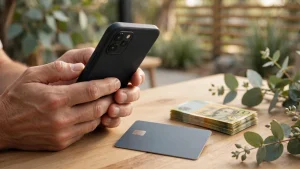
Some descriptions put PayID clearing at within minutes once a payment has been released. This is consistent with a real-time network, but it is not a fixed arrival time for every transfer. The 3–15-second range describes typical casino deposit arrivals; “within minutes” allows for a broader interval. Neither figure guarantees when an operator will display the funds in an account.
If a payment appears delayed, the useful question is which stage is pending. A bank confirmation can indicate that a transfer was sent, but it does not establish that the recipient has matched and credited it. Conversely, a delay in the casino balance does not by itself show that the banking network has failed. The network settlement and the operator’s account processing are related, but they are not the same event.
This distinction also applies to language such as “pay by phone”. A payment initiated on a phone through a banking app does not acquire a different settlement speed simply because a mobile device was used. PayID timing concerns the transfer through the NPP; it does not describe a charge added to a mobile phone bill. The phrase “pay by phone casino” therefore does not tell you how quickly an account will be credited.
A careful reading of any payment-time statement should separate three claims: when you confirm a payment, when the transfer settles, and when an operator records the deposit. Only the network stage is described by real-time settlement. Casino-side handling remains separate, so a short network time should not be treated as a guaranteed end-to-end time.
These timing details are not an endorsement of using an online casino. In Australia, the Interactive Gambling Act 2001 prohibits operators from providing real-money online casino games, including pokies and table games, to people physically in the country. Payment speed does not change that legal position or establish that a service is lawful.
In practical terms, PayID can reach a casino recipient quickly, often within seconds, while the complete path from payment confirmation to visible account credit may take longer. Treat the network’s speed and the operator’s processing as separate parts of the timeline, rather than assuming that one confirms the other.
Assessing a Casino Payment Method Without a Best-of List
A payment label is not proof that a casino is trustworthy, that a deposit will be credited correctly or that a withdrawal will be available. Treat claims about phone payments as something to verify, not as a reason to choose a site. In Australia, real-money online casino games are prohibited for operators under the Interactive Gambling Act 2001, so a payment page does not make an online casino offer lawful or safe.
PayID is a bank payment service, not a charge added to your mobile phone bill. If a site describes a PayID transfer as “pay by phone”, check what it means before proceeding. A transfer made in your banking app uses money from your bank account; it is not the same as paying through a phone carrier. Confusing the two can lead you to expect a billing option that is not actually being offered.
For any payment request, check that the recipient details shown by your bank match the details the site has provided. Do not rely on a logo, a familiar payment name or a page that looks polished. If the recipient name is unexpected, unclear or different from what you were told to expect, stop rather than sending money and hoping it will be sorted out later.

A reference matters too. Some casino payment systems need your player ID or username in the payment reference to match a transfer to an account automatically. If the reference is missing or wrong, the money may remain pending and require manual handling. Check that the reference is complete and unique, and keep the transfer confirmation in case you need to explain a delay. A payment receipt shows that you sent money; it does not by itself prove that the casino has credited it.
Your bank, not the casino, sets PayID transaction limits. These limits differ between banks. Most major Australian banks allow PayID payments of AUD 1,000 to AUD 5,000 per transaction, with daily limits between AUD 10,000 and AUD 20,000. Your own account settings and bank rules are the relevant ones, so do not assume that a figure shown in a casino payment description is a limit your bank will permit. A bank may also apply its own checks or restrictions.
Assess the whole payment claim, not just the word “PayID”. Look for a clear explanation of the recipient, reference requirements, and what to do if a payment is not matched. Be wary of pressure to send money quickly, requests to use somebody else’s account, or instructions to change the recipient details without a clear reason. If the explanation is inconsistent, contacting your bank through its usual channel is safer than relying on contact details supplied in a suspicious payment message.
Terms such as “best” or “accepted” do not establish that a payment method is available to you, that it supports withdrawals, or that a particular site is reliable. A method can describe how money is sent without confirming what happens after it arrives. Do not treat a payment badge or a claimed phone-payment option as evidence of a dependable service.
No-Wagering Claims: Check the Terms Before You Count on Them
A “no-wagering” label can sound like a promise that a bonus is immediately withdrawable. It is not enough on its own to establish that. Read the conditions attached to the offer and check what the label applies to: the bonus, any winnings made with it, or both. A condition may still limit how much can be withdrawn or set rules for using the bonus.

A “no-deposit” offer is a different claim. It suggests that a qualifying bonus does not require a deposit, but it does not tell you whether you must meet other conditions before withdrawing winnings. Nor does it confirm that an offer is available to you. Treat the headline as a summary, not the full agreement.
This matters when a payment label appears beside a promotion. PayID is a way to make a payment through a banking app; it does not establish that a bonus has no wagering conditions. The deposit process may involve selecting PayID, entering an amount and confirming the payment in your banking app, but those steps say nothing about the offer’s withdrawal rules. A phone-bill payment claim, a phone-number reference, or the absence of a named service such as Boku also does not prove that a promotion exists or that its terms are favourable.
Before relying on any bonus wording, look for the complete conditions and check:
- whether wagering requirements apply to the bonus or resulting winnings;
- the maximum bet while bonus funds are active;
- which games contribute, and how game weighting affects progress;
- any time limit for meeting the conditions; and
- the maximum cash-out permitted.
If any of these terms are unclear or unavailable, do not assume the headline settles the point. Ask for the full conditions before making a decision, and keep a copy of what was displayed. A payment method does not replace those terms.
There is also a legal boundary that a promotion cannot change. Under Australia’s Interactive Gambling Act 2001, operators must not provide real-money online casino games—including pokies, poker and table games—to people located in Australia. Advertising those services to Australian audiences is also prohibited. A label describing a bonus or a payment route should not be taken as evidence that an online casino offer is lawful or available to Australian residents.
The same care applies to claims about phone-based casino play, whether a page describes a deposit bonus or an offer that supposedly needs no deposit. Check what the conditions actually say, rather than treating “no wagering” as a guarantee of unrestricted cash-out.
BetStop Searches and the Limits of Payment-Method Claims
A payment label cannot tell you whether a casino is connected to BetStop, whether it accepts phone-bill charges, or whether a service is lawful to use from Australia. Those are separate questions. A page advertising “pay by phone” may be referring to a phone-bill payment, a mobile banking app, or simply a payment made on a phone. The wording alone does not establish which one.
- BetStop
-
An Australian regulatory system used to manage and enforce self-exclusion for gambling.
Nor does a claim that a casino is “not on BetStop” confirm anything about its payment options or status. BetStop status cannot be inferred from a PayID logo, a phone-payment label, or the absence of a particular provider such as Boku. If a page makes such claims, treat them as claims about the operator, not as facts proved by the payment method.
PayID is a service on the New Payments Platform. It lets people send and receive money using an identifier such as a mobile number or email address. That does not mean the casino charges the amount to your mobile phone bill. A phone number used as a PayID identifier is a banking detail, not evidence of a carrier-billed payment.
“No deposit” wording also needs to be read literally and in context. It does not prove that a phone-bill payment is available, that a deposit is unnecessary for every offer, or that an account has a particular BetStop status. Keep the payment claim separate from any promotion or self-exclusion claim.
There is a further point that a payment page cannot settle: Australian law prohibits operators from providing real-money online casino games to people physically in Australia. A payment option does not change that legal position or show that a service is permitted for Australian residents. Avoid treating an offshore payment page as evidence of lawful access.
If you have already made a PayID transfer and it has not appeared in an account, the payment reference may matter. Some casinos require your player ID or username there to match the transfer automatically; without it, the deposit can remain pending and need manual handling. That issue concerns crediting the transfer. It does not establish anything about BetStop or phone-bill billing.

In short, read each claim narrowly: a payment method describes a way to move money, not the operator’s BetStop status, the availability of phone-bill charges, or the legal status of real-money casino games in Australia.
Casino Games and Bonuses: What Payment Facts Can—and Cannot—Confirm
A payment option tells you how money may be sent; it does not tell you which games or promotions are available. The label “pay by phone” can also blur two different ideas: paying through a banking app on your mobile, and charging a purchase to a phone bill. A PayID payment is made through your bank, not added to your phone bill.
That distinction matters when you are looking for pokies or other casino games described as payable by phone. The payment details can establish that a deposit is made by choosing PayID, entering an amount and confirming it in your banking app. They cannot establish that a particular game accepts a separate phone-bill payment, or that a named casino site offers specific games.
Deposit minimums are not evidence of a game or bonus feature, either. PayID deposits at casinos may have minimums in the AUD 10–20 range; some bank-transfer deposits may be accepted from AUD 5. Those figures describe possible deposit thresholds, not the price of a spin, a guarantee of access, or a promotion attached to a payment method. Check the terms shown for the particular service rather than assuming a threshold applies to every game or account.
- Check if wagering requirements apply to the bonus or winnings
- Verify the maximum bet allowed while funds are active
- Identify which games contribute to progress
- Note any time limits for meeting conditions
- Confirm the maximum allowed cash-out
The same care applies to a casino bonus advertised alongside a phone payment option. The payment method alone does not confirm that a bonus exists, who can claim it, or what conditions apply. Before accepting any offer, read its wagering requirements, maximum bet limits, game weighting, time limits and maximum cash-out conditions. These rules can affect whether an offer is useful to you, regardless of how quickly a deposit is made.
If a page uses “pay by phone” to describe PayID, look for the actual payment instructions and identify whether the transfer is initiated through a banking app. Do not treat that wording as proof that your mobile provider will bill the amount, or that any particular pokies, game or bonus is included. A payment label confirms a route for transferring funds only when its instructions make that route clear; it does not verify the surrounding game or promotion claims.
Online Casino Payment Pages: Check the Transfer Details
A payment page can label a deposit “PayID” without making it a phone-bill charge or confirming anything about the service behind it. In Australia, real-money online casino games are prohibited for operators to provide to people in the country. Treat a casino payment screen with that context in mind; a familiar payment option is not evidence that the service is lawful.

If you encounter a PayID payment request, read the transfer details before confirming anything in your banking app. Check that the recipient shown by the bank matches the recipient information supplied on the payment page. If the name is missing, unexpected or inconsistent, do not proceed until you can resolve the discrepancy. A payment sent to the wrong recipient may be difficult to recover.
Pay close attention to the payment reference. Some services need your player ID or username in that field to match the transfer to an account. If the reference is missing or incorrect, the deposit may not be credited automatically and could remain pending while support staff handle it manually. Copy the required identifier carefully, and check the completed reference on the bank screen before you approve the payment. Do not assume the page has carried it across correctly.
The basic sequence is to select PayID on the payment page, enter the requested amount and confirm the transfer through your banking app. The final bank screen is where you can check the recipient and reference as they will actually be sent. Do not rely only on a page that says a transfer is ready or complete; compare the details displayed by your bank with the instructions you were given.
Searches for mobile-phone slots or casino payments can blur two different things: using a phone to access a banking app and charging a payment to a phone account. A PayID instruction points to a bank transfer, not a phone-bill charge. Whatever wording a payment page uses, it does not change the legal status of real-money online casino games in Australia.
Is PayID a phone-bill payment?
No, PayID is a service through the New Payments Platform (NPP) that transfers money from your bank account using an identifier like a mobile number.
How fast do PayID deposits clear?
While the network settlement via NPP is typically 3–15 seconds, the time it takes for an operator to credit your account can vary.
Can I use PayID to play online casinos in Australia?
Under the Interactive Gambling Act 2001, providing real-money online casino games to people in Australia is prohibited, regardless of the payment method used.
PayID Is Not a Credit Facility
PayID is a way to send money through your bank, not a way to borrow from your mobile provider. It operates through the New Payments Platform (NPP), where a mobile number or email address can identify the recipient. The identifier is a routing detail; it does not turn the payment into a phone-bill charge.
That distinction matters when a payment page uses wording such as “pay by phone”. It may refer to a carrier-billed service, where a charge is added to a phone account, or simply to a transfer you approve in a banking app on your mobile. Those are different arrangements. Seeing a phone-related label does not establish that a payment uses PayID, offers credit, or will be billed through your carrier.
With PayID, your bank is central to the transaction. Its rules determine the limits that apply to your account, and those limits differ between banks. Before authorising a payment, consider whether the money is available in the account and whether your bank permits the transfer. PayID itself is not an overdraft, a loan, or a credit line, and it does not change the financial terms of your bank account.
If a payment page refers to a phone-bill option or names a third-party billing service, do not assume it works like PayID. Check who would receive the payment and how the charge would appear on your account before proceeding. A familiar payment label cannot establish that you are being offered credit or explain the conditions attached to a separate service.
There is also an important Australian context: the Interactive Gambling Act 2001 prohibits operators from providing real-money online casino games to people physically in Australia. A payment method does not change that restriction. Nor does the ability to initiate a transfer on your phone make a casino payment a mobile-phone credit product.

Treat PayID as a bank-mediated payment, with your bank’s limits and account rules applying. Treat carrier billing and credit as separate arrangements that require their own clear terms. If the payment page does not explain which one it is, do not rely on the wording alone.
Free Spins and Credit Offers: Verify the Conditions First
A promise of free spins or a credit offer does not tell you what you would need to do to use it, whether winnings could be withdrawn, or whether the offer is available to you. Treat the wording as an invitation to inspect the terms, not as evidence of value. No particular promotion can be assumed from a payment option or its label.
PayID deposits can reach a casino within seconds—typically in 3 to 15 seconds—but that describes the transfer, not an offer’s fairness, eligibility rules or cash-out conditions. Fast payment is no reason to rush through the small print. Before accepting any bonus, look for wagering requirements, maximum bet limits, which games count, time limits and maximum cash-out terms. If a condition is unclear, do not rely on an assumption about what it means.
The word “credit” can also make a promotion sound like money you can freely use. Read the conditions to establish whether it is a bonus, what restrictions apply and what happens to any winnings. A payment method cannot confirm those details.
There is a further point for anyone in Australia: operators are prohibited from providing real-money online casino games to people in the country, and advertising those services to Australian audiences is not allowed. A free-spins or credit-offer label does not change that position. Avoid treating such wording as an endorsement or as proof that an offer is lawful, available or suitable for you.
What are the minimum and maximum deposit limits at PayID casinos?
PayID casino deposits commonly start at AUD 10–20, though some bank-transfer options accept as little as AUD 5. Your bank sets PayID transaction limits; major Australian banks commonly allow AUD 1,000–5,000 per transaction, with daily limits of AUD 10,000–20,000.
How long do withdrawals take?
For verified accounts, withdrawal requests at top-rated PayID casinos are typically reviewed within 2–6 hours. Once approved, PayID withdrawals may arrive within minutes to hours, but casino processing can cause delays.
Can you withdraw casino winnings using PayID?
Yes, PayID can be used for casino withdrawals where the operator offers it. After approval, funds may arrive within minutes to hours; casino processing is often the main cause of delays.
Do Australian online casinos support PayID withdrawals?
No online casino can lawfully provide real-money casino games to people physically located in Australia under the Interactive Gambling Act 2001. A site offering PayID withdrawals does not change that.