
Assess payout claims before choosing an online pokie
The guide separates promotional payout language from verifiable evidence and explains Bitcoin deposits, withdrawals and related risks.

What the “Best Paying” Claim Can—and Cannot—Tell You
A claim that a casino or pokie is “best paying” sounds like a comparison, but the phrase alone does not tell you what was measured or how. It may refer to a game, a casino’s overall offer or simply promotional language. Without clear, comparable evidence behind it, the claim is not a dependable guide to what you might receive from play.
That matters when you are trying to compare online gambling services from Australia. A label suggesting high payouts does not establish that one game or operator returns more than another. Nor does it tell you whether the wording is based on a measured result, a published figure or an informal opinion. Treating the phrase as a firm ranking can give it more weight than it deserves.
The Australian legal setting also changes how these claims should be read. Online casino-style services cannot be provided lawfully to people in Australia under a local casino licence. The operators discussed in this context instead hold licences from overseas authorities, primarily Curacao eGaming or the Anjouan Gaming Authority. An offshore licence is not an Australian licence, and it does not make the service locally regulated or authorised for Australian residents.
Casinos listed by licence
When looking for online pokies that pay, you’ll want to check the available operator and payment information before deciding where to play. This list gives you a concise starting point for that research.
-
GoldenCrown
- License
- Curacao Gaming Control Board OGL/2023/176/0095 (Hollycorn N.V.)
GoldenCrown lists a Curacao Gaming Control Board licence, OGL/2023/176/0095, held by Hollycorn N.V.
-
SkyCrown
- License
- Tobique Gaming Commission
- Payout speed
- crypto ~10-15 minutes, fiat 1-5 days
- Min. deposit
- A$30
SkyCrown lists a Tobique Gaming Commission licence. Its stated payout times are around 10–15 minutes for crypto and 1–5 days for fiat; the minimum deposit is A$30.
-
Playfina Casino
- License
- Curacao eGaming (Hollycorn N.V., since 2017)
- Min. deposit
- A$20-30 (depends on the offer)
Playfina Casino lists a Curacao eGaming licence held by Hollycorn N.V. since 2017. Its minimum deposit is A$20–30, depending on the offer.
-
JustCasino
- License
- Curacao Gaming Control Board
JustCasino lists a Curacao Gaming Control Board licence, giving you a licensing detail to consider when researching the operator.
-
JeetCity Casino
- License
- Curacao eGaming (Dama N.V.)
JeetCity Casino lists a Curacao eGaming licence held by Dama N.V.
-
DragonSlots Casino
- License
- Curacao Gaming Authority (Jumpman Gaming Ltd)
DragonSlots Casino lists a Curacao Gaming Authority licence held by Jumpman Gaming Ltd.
-
Lucky Dreams
- License
- Curacao
- Min. deposit
- A$20 (POLi)
Lucky Dreams lists a Curacao licence and a A$20 minimum deposit via POLi.
-
SpinsUp
- License
- Curacao Gaming Control Board OGL/2023/174/0082 (Dama N.V.)
SpinsUp lists a Curacao Gaming Control Board licence, OGL/2023/174/0082, held by Dama N.V.
-
Wild Tokyo
- License
- Curacao
- Payout speed
- crypto 30-60 minutes, fiat 1-5 days
- Min. deposit
- A$10
Wild Tokyo lists a Curacao licence. Its stated payout times are 30–60 minutes for crypto and 1–5 days for fiat, and its minimum deposit is A$10.
-
Vegaz Casino
- License
- Curacao OGL/2024/1335/0780
- Min. deposit
- EUR 20
Vegaz Casino lists a Curacao licence, OGL/2024/1335/0780, and a minimum deposit of EUR 20.
That distinction is easy to miss when a site presents its licence as a mark of trust. A foreign licence may describe the jurisdiction in which an operator is licensed, but it does not give you the protections or oversight of an Australian online casino regulator. Australian consumer protection laws do not apply to these offshore operators. If a dispute arises, you should not assume that Australian consumer protections can resolve it or require the operator to meet an Australian standard.
In practice, this means a payout claim and a licence claim answer different questions. “Best paying” suggests something about returns, while a licence identifies an overseas regulatory connection. Neither statement, by itself, establishes how a particular game performs or guarantees how an operator will handle a player’s funds. A licence should not be read as proof of a high payout, and promotional payout language should not be read as evidence of local consumer protection.
It is also worth separating a headline from a meaningful comparison. To compare payout claims responsibly, you would need consistent information about what is being compared and a clear basis for the comparison. A broad label applied to a casino cannot automatically be transferred to every game it offers; a claim about a game cannot automatically be taken as a claim about every casino carrying it. The words may sound precise while leaving those distinctions unclear.

For you, the practical point is simple: do not make a money decision on the strength of a superlative. A phrase such as “best paying” does not, on its own, show that a return is likely, that results are predictable or that one option is better for an individual player. It is safer to read such wording as a claim that needs substantiation, not as a promise or a verified outcome.
There is a further boundary in Australia: advertising real-money online casino services to Australian audiences is prohibited. That makes it particularly important to distinguish neutral information about the legal landscape from material that encourages you to sign up or play. This discussion is not a recommendation to use an offshore casino. It is a reminder that a striking payout claim does not change the legal position or bring an offshore operator within Australian consumer protection law.
If you encounter a “best paying” label, consider what it actually establishes before relying on it. Does it identify what is being compared? Is the claim presented as promotional wording or as a measured finding? Does it blur the difference between an offshore licence and Australian oversight? If those points are not clear, the label should not carry much weight in your decision.
The phrase can attract attention, but it cannot substitute for evidence or remove the risks of dealing with an offshore operator. In Australia, the distinction between an overseas licence and local protection is not a technical detail. It is central to understanding what a payout claim does—and does not—mean.
Legal Status
Online casino-style services cannot be provided lawfully to people in Australia under a local casino licence.
How Bitcoin Pokies Handle Game Credits
Bitcoin pokies are digital slot machines that accept Bitcoin as a payment method. The name describes the currency accepted, but it does not mean that every game uses a shared Bitcoin-based credit unit. A credit is tied to the individual game, so the meaning of a displayed balance depends on that game rather than on a standard value that applies across all pokies.
A specialist review describes the Bitcoin value of game credits as depending on both the game and the current BTC price. That distinction matters: a credit count and a Bitcoin amount are not interchangeable labels. Seeing a balance expressed in credits does not, by itself, tell you how much Bitcoin those credits represent. The relationship has to be understood in the context of the specific game and the price of Bitcoin at the relevant time.
This can make comparisons between games less straightforward than their displayed balances suggest. Two games could show the same number of credits without that number representing the same Bitcoin value. Conversely, a credit amount in one game cannot safely be carried over as a conversion guide for another. The figures belong to separate game-specific systems; they do not establish a common scale.
Bitcoin’s changing price is a further reason not to treat a credit as though it had a permanent Bitcoin equivalent. The stated relationship depends partly on the BTC price, which changes over time. A conversion understood at one point should not be assumed to remain identical later. The credit count may be legible on the screen, but the Bitcoin value it corresponds to is a separate matter.

When you encounter wording such as “best paying” alongside a game balance, keep the two ideas distinct. Credit denomination tells you how the game expresses its play balance; it does not, on its own, show how much a game returns. A larger-looking credit figure is not proof of a higher payout, and a smaller figure is not evidence of a lower one. The unit used for a balance and the result of play are different questions.
It also helps to separate the payment currency from the game’s internal credit description. Bitcoin is the payment method named in “Bitcoin pokies”; game credits are specific to the individual game. The terms therefore refer to different parts of the arrangement. Knowing that a game accepts Bitcoin does not automatically tell you the value assigned to each credit, while knowing a credit balance does not automatically state an amount of Bitcoin.
If a game presents a credit balance, avoid reading more into the number than it communicates. It is a balance expressed for that particular game, not a universal measurement for comparing all online pokies. The Bitcoin equivalent depends on the game and the current BTC price, as described by the specialist review, rather than on a fixed market-wide conversion. Without that context, a credit total alone cannot give you a reliable Bitcoin amount.
This is a narrow but useful distinction: Bitcoin pokies accept Bitcoin, while their credits remain game-specific. Treating those as separate concepts makes the displayed numbers easier to interpret without assuming that the credit unit has a fixed Bitcoin value or carries a meaning shared by every game.
Free Play and Real-Money Play Are Not the Same
Online pokies may offer a choice between free play and real-money play. The screen can look much the same in either mode, but the distinction matters: one lets you play without staking money, while the other involves money at risk. Neither mode, by itself, tells you whether a game is generous or likely to return more.
Free play can be useful for becoming familiar with a game’s layout and features. It lets you see how the controls work and what happens during play without turning each result into a financial gain or loss. That experience has limits, though. A run of favourable results in free play is not evidence that the same outcomes will follow in real-money play, and a poor run does not establish what would happen in another session.
Real-money play changes the consequence of each result. Your balance can rise or fall, and an enjoyable experience in free play does not remove that financial risk. Treat the modes as different ways to access a game, not as two tests that can reveal which title is among the best-paying online pokies. A free session cannot establish that a game pays well, and choosing to stake money cannot make its returns more predictable.

This distinction is especially important when a game is described as a high payer. The mode you use is not a measure of the game’s returns. Free play may show you how a game behaves on screen, but it does not establish what a real-money session would return. Real-money results, in turn, do not prove that a game will produce similar outcomes for you later. A label such as “best-paying slot” should not be treated as a promise attached to either mode.
There is also a legal boundary for people in Australia. Under the Interactive Gambling Act 2001, online casino-style services, including pokies, cannot legally be provided for real-money play to people physically in Australia. A locally licensed casino therefore cannot offer residents real-money online pokies. Offshore operators may be accessible, but Australian consumer protection laws do not apply to them. This is not a recommendation to use an offshore service; it is a material difference to understand when reading claims about play modes.
If you encounter free-play and real-money options on an offshore site, do not assume that the presence of a free mode makes the real-money service lawful or protected. Nor does a free option make claims about a game’s payment performance more trustworthy. Keep the question of what the mode involves separate from the question of how a game is described: they are not interchangeable evidence.
Real-money gambling is for people aged 18 or older. If you are considering any gambling, decide in advance what you can afford to lose and stop if play is causing distress or financial pressure. Free play avoids a stake, but it should not be used to encourage you towards spending or to suggest that a money-making opportunity has been demonstrated.
DO
- Use free play to become familiar with a game's layout and features.
- Decide in advance what you can afford to lose.
DON'T
- Assume free play results predict real-money outcomes.
- Make money decisions based on superlative claims like "best paying".
This page is affiliate material and may contain sponsored links. That disclosure does not turn information about offshore gambling into an endorsement. The practical distinction remains simple: free play involves no money stake, while real-money play does. Neither one establishes that a game is a reliable payer, and a game’s appearance or results in one mode should not be taken as a guide to returns in the other.
Why a Pokie Cannot Be Verified as a High Payer Here
A claim that a pokie is a high payer is not the same as evidence that it returns more than another game. Without comparable, game-specific payout figures, there is no reliable way to rank individual games or identify a “best paying” option. A confident label, a prominent placement or a player’s account of a win cannot fill that gap.
To compare games on payout, you would need figures that relate to the games themselves and are measured on a consistent basis. You would also need to know what those figures represent and whether the same method was used for each game. If one claim is based on promotional wording and another on a different measure, putting them side by side would create an appearance of comparison without showing which game pays more.
This matters because an individual result does not establish how a game performs overall. A story about a large win can tell you that someone reports winning; it cannot, by itself, show what other players should expect or whether one game has a higher payout than another. The same caution applies to brief descriptions such as “generous” or “high return” when they are not accompanied by information that can be checked and compared.
For anyone trying to assess claims about the best paying pokies online, the important question is not which title sounds most convincing. It is whether the claim gives enough detail to support a meaningful comparison. If it does not identify the specific game and explain the basis of its payout statement, it should not be treated as proof of superior returns.

A list of supposed top payers can make this distinction harder to see. Ordering names from first to last suggests that the games have been measured against one another. Without comparable figures behind that order, the ranking is only a presentation, not a dependable guide. No particular game can be named as the best payer on that basis.
Be careful, too, not to read the word “best” as a promise about what you personally might receive. A general claim about a game, even when presented as a comparison, cannot establish the outcome of an individual play. It is not a dependable basis for deciding to spend money, and a game’s reputation does not make its result predictable.
The same standard applies to claims aimed specifically at Australian players. Adding “Australia” to a description does not make a payout statement more precise, nor does it supply the missing basis for comparing one game with another. A regional label is not game-level evidence.
A careful way to read these claims is to separate what is asserted from what is demonstrated. Promotional language may express an opinion, but it does not show a measurable difference in returns. If a claim cannot be checked against comparable information about individual games, the honest answer is that it cannot establish which one pays more.
That is why a reliable answer to the question of which pokie pays best cannot be given from labels or anecdotes alone. Treat any ranking without a clear, comparable basis as unconfirmed rather than as a tested result. Do not mistake the confidence of the wording for evidence.
Bitcoin’s Practical Trade-Offs for Online Play
Bitcoin can change how money moves between a wallet and an online service, but it cannot tell you whether a game pays well. A payment method affects the handling of funds, not a pokie’s return or the likelihood of a particular result. Faster transfers or lower charges are not evidence of better odds.
A specialist review describes Bitcoin deposits and withdrawals as being processed almost instantly, in contrast with the longer waits often associated with traditional banking. That is a description of the payment method, not a guarantee about every transaction or an operator’s handling time. A service may still take time to review or process a request, so the speed of a blockchain transfer should not be confused with the time it takes for funds to appear in an account.
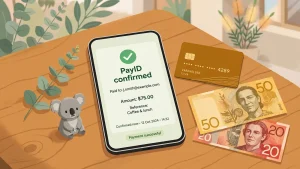
Blockchain technology provides a secure record of transactions. That does not make every part of using Bitcoin secure by itself: access to your wallet depends on protecting its credentials, and a transfer cannot simply be recalled if you make a mistake. Transactions sent to an incorrect address are generally unrecoverable because blockchain transfers are irreversible. Check the details carefully before confirming any payment.
Bitcoin can offer more anonymity than conventional payment methods, but that does not mean a transaction is untraceable or that an account is anonymous. Transactions are recorded on the blockchain, and a service may still ask you to identify yourself. Treat privacy as relative: using Bitcoin does not remove the need to understand what information a service collects or how it may connect wallet activity with your account.
Fees are another consideration. A specialist review characterises Bitcoin charges as lower than those associated with credit cards and other conventional payment options. The actual cost can vary, and Bitcoin transfers also incur miner’s fees that change over time. A separate specialist review describes those fees as usually minuscule; that description should not be read as a fixed price or a promise that every transfer will cost little. Check the fee shown for the transaction before sending it.
These trade-offs are practical rather than predictive. A transfer that clears quickly does not make a game more likely to return money, and a lower transaction fee does not improve its payout rate. If you are weighing payment convenience against privacy, costs and the risk of an irreversible mistake, consider each separately from any claim that a game is a high payer.
Sending a Bitcoin Deposit—and What Can Go Wrong
A Bitcoin deposit involves moving funds from a personal wallet to an address supplied by an online casino. The process may sound simple, but a mistake can be difficult or impossible to fix. For someone in Australia, it is also important to understand the legal context: real-money online casino services are prohibited for operators providing them to people in Australia, and Australian consumer protection laws do not apply to offshore operators.
Bitcoin Deposit
-
1
Acquire Bitcoin
Purchase Bitcoin through a cryptocurrency exchange and hold it in a wallet.
-
2
Obtain Address
Copy the account address supplied by the operator's deposit page.
-
3
Confirm Transfer
Check that the destination address in your wallet matches the supplied address before sending.
The first step in the payment flow is acquiring Bitcoin. It can be purchased with ordinary currency through a cryptocurrency exchange, then held in a wallet. If you are dealing with an offshore service, do not treat the presence of a deposit page as evidence that the service is lawful, safe or able to resolve payment problems.
A deposit page provides an account address for the transfer. The stated process is to copy that address and send Bitcoin to it from your wallet. Before confirming a transaction, check that the destination shown in your wallet matches the address supplied for that deposit. Cryptocurrency transfers cannot be reversed through the blockchain. If Bitcoin is sent to the wrong address, recovery is generally not possible.
Even a transfer sent to the displayed address may not appear in the account as expected. An operator may fail to recognise a deposit if an address has been reused, the amount sent is lower than required, or the operator has not yet detected the payment. These are distinct problems: a transaction can be sent successfully while the account balance remains unchanged.
Keep the transaction details and any deposit instructions available until the payment is accounted for. If the balance does not update, compare the destination address and the amount sent with the instructions, then contact the operator through its stated support channel. Avoid sending another payment simply because the first one has not appeared; a second transfer does not correct an address or recognition problem and may create a further loss.

Bitcoin’s irreversible nature makes the final confirmation especially important. If an address is incorrect, there is generally no bank or card issuer able to cancel the transfer. An offshore operator may also be outside Australian consumer protection rules, limiting the remedies available if a payment dispute arises.
This page is affiliate material and may contain sponsored links. That disclosure does not amount to a recommendation or make an offshore casino service lawful for Australian residents.
Before You Consider Real-Money Play from Australia
This section is not a guide to opening an offshore casino account or starting real-money play. Under Australia’s Interactive Gambling Act, operators cannot provide online casino games, including pokies, to people physically in Australia. Offshore sites may be accessible, but that does not make their services lawful to provide here. Australian consumer protection laws do not apply to the offshore operators discussed in this material.
Real-money gambling is for people aged 18 or older. That age threshold does not change the legal position for casino operators serving people in Australia. This is affiliate content and may include sponsored links; that disclosure is not an endorsement or a recommendation to use an offshore casino. No operator is named or recommended here.
- Verify the operator's licensing and reputation.
- Confirm the legal status of the service for Australian residents.
- Understand how the service collects your personal data.
- Check for any limitations on local consumer protection.
Some general advice in specialist reviews is to assess a site’s reputation, licensing and range of games. For an Australian reader, those checks should not be treated as a way to identify a suitable real-money casino: a foreign licence does not authorise an operator to offer online casino games to people in Australia. Reviews and promotional material may also have a commercial interest, so their claims are not a substitute for independent legal or consumer guidance.
A typical online account form asks for basic details and a password. Do not interpret a simple sign-up process as evidence that a service is appropriate or protected under Australian law. Before sharing personal or financial information with any online service, consider what data it collects and who may be able to access it.
Bitcoin can be bought with fiat currency through cryptocurrency exchanges. That describes a general way to acquire the asset, not a recommendation to obtain it for gambling or to transfer it to an offshore casino. Crypto transactions sent to the wrong address are generally irreversible and unrecoverable, so avoid treating a transfer as something that can be cancelled if you change your mind.
If you are assessing online gambling information, distinguish factual explanations from material designed to attract customers. Sponsored links may lead to services outside Australia’s consumer-protection framework. A licence issued elsewhere does not remove that limitation, and a polished website or positive review cannot provide the protections available under Australian law.
Verification Before You Request a Withdrawal
Identity checks can become part of a withdrawal process, so it is worth understanding what an offshore operator may ask for before you rely on an account balance. Completing checks early may reduce the chance that a request is held while documents are reviewed. It does not guarantee approval or payment, and it says nothing about whether a game or casino pays well.
A three-stage process is described for some services: registration checks, identity and address documents, then verification that you control the cryptocurrency wallet used to deposit. The timing of the document stage varies. An operator may ask for it when you make your first withdrawal, or after your cumulative deposits reach a threshold somewhere between AUD 2,000 and AUD 5,000. The threshold depends on the operator; do not assume that one account’s requirements apply to another.
Check the account’s verification instructions and make sure the details you provide are consistent with your documents. If the operator requests identity or address evidence, submit the requested material through its stated channel and keep a record of what you sent. Avoid altering documents or providing details that do not match your account: discrepancies can create further questions rather than resolve them.
Crypto ownership checks can require additional evidence. A specialist review describes possible requests to sign a message using the deposit address, or to provide a wallet screenshot that shows the outgoing transaction. These are not universal requirements, so confirm the operator’s instructions before sending sensitive information. Never share a wallet recovery phrase or private key; those are not proof that you own an address.
A specialist review also advises completing the later verification stages before a first withdrawal, preferably within 24 hours of registration, and says this can remove a common cause of payout delays. Treat that as guidance from a review, not a promise: checks may still take time, and operators can request further information.
Australian consumer protection laws do not apply to offshore operators. Keep copies of messages and submitted documents, and consider carefully whether you are comfortable sharing them before proceeding. Verification can address identity and wallet ownership; it cannot make an offshore service locally regulated or guarantee that a withdrawal will be approved.
Bitcoin Withdrawals: Delays, Fees and Warning Signs
A Bitcoin withdrawal request generally involves entering your wallet address in the casino’s withdrawal form. Check the address carefully before submitting: blockchain transfers sent to an incorrect address are irreversible and generally cannot be recovered. A copied address can still be wrong if it is incomplete or altered, so compare it with the address shown in your wallet.
A specialist review reports that most Bitcoin withdrawal transactions are completed within an hour. That describes the reported transaction timing, not a guaranteed deadline for receiving funds. The operator may need to approve the request first, and that stage can take longer. Approval queues, incomplete account checks and processing batched during business hours are common reasons for a wait. After approval, the blockchain transfer is a separate step.
Bitcoin transfers also incur miner’s fees. These vary over time; a specialist review describes them as usually minuscule, but the amount can change with network conditions. Check whether the operator deducts a fee from the withdrawal and what amount will arrive in your wallet before confirming the request.
A security review can add further delay. Some operators may scrutinise a significant win, particularly when the account is new or the request is a first large withdrawal. A review can be legitimate, but repeated requests for documents or unexplained delays deserve careful attention. Keep records of the request, any messages and the transaction details; do not share wallet recovery words or private keys.
Most importantly, do not send more money to release a withdrawal that appears stuck. A demand for an extra deposit as a condition of paying out is a serious warning sign, not a reason to risk more funds. Offshore operators are not covered by Australian consumer protection laws, so resolving a dispute may be difficult. Real-money online casino services are prohibited for operators providing them to people in Australia; this information is not an invitation to use one.
Bonus Terms and Disputes That Can Affect a Payout
Bonus conditions can affect whether play counts toward a withdrawal. A key detail is each game’s wagering contribution: the share of qualifying play that is credited towards a bonus requirement. If the terms do not explain this clearly, you may believe you have met a condition when the operator calculates it differently.
Contributions can vary by game. The stated terms may assign table games a 0% contribution and pokies a 100% contribution, while some high-RTP slots may be capped at 50%. These differences can change how much qualifying play is recorded. Check whether the terms specify contributions by game and whether any caps apply; broad wording such as “eligible games” may not tell you enough to judge how a particular game is treated.
Maximum-bet rules are another potential source of dispute. Bonus play may be voided if you exceed the stated limit, even if the play otherwise appears to meet the offer conditions. Read the limit and the consequences carefully before taking part, and keep a copy of the terms that applied when the bonus was accepted. If the wording is unclear, do not assume the operator will interpret it in your favour.
This is information, not a recommendation to use a casino or accept a bonus. Real-money online casino services are prohibited for operators serving people in Australia, and Australian consumer protection laws do not apply to offshore operators. This affiliate content may include sponsored links; that disclosure does not make any service suitable or authorised for Australian readers.