
Understand the payment method before you play
Bitcoin changes how money may be used for online pokies, while the game remains a slot game with outcomes that cannot be predicted.

How Bitcoin Pokies Work in Online Play
Bitcoin pokies are digital slot-machine games that accept Bitcoin as a payment method when played for real money. The game itself is still an online pokies game; Bitcoin changes how money may be used to play, not what the game is. The key distinction to understand is whether you are playing in free mode or using real money.
Free play and real-money play
Online pokies may offer a choice between free play and real-money play. In free play, you can interact with a game without wagering Bitcoin or other money. It can help you understand the basic format, but it is not the same as playing for real money: the financial stakes are different.
Real-money play involves money being put at risk. Where Bitcoin is accepted, it is used as a form of payment in connection with that play. That does not make the game a different kind of product, or make its results a source of income. A game outcome should not be treated as predictable simply because the payment method is digital.
Casinos listed by licence
When you’re looking for bitcoin pokies in Australia in 2026, checking the available operator details can help you decide what to investigate before playing. Use this list as a reference, and confirm the payment options and terms that matter to you.
-
GoldenCrown
- License
- Curacao Gaming Control Board OGL/2023/176/0095 (Hollycorn N.V.)
GoldenCrown lists a Curacao Gaming Control Board licence, OGL/2023/176/0095, held by Hollycorn N.V. Check whether its payment options meet your needs for bitcoin pokies.
-
SkyCrown
- License
- Tobique Gaming Commission
- Payout speed
- crypto ~10-15 minutes, fiat 1-5 days
- Min. deposit
- A$30
SkyCrown is licensed by the Tobique Gaming Commission. Its listed payout speeds are around 10–15 minutes for crypto and 1–5 days for fiat, and its minimum deposit is A$30.
-
Playfina Casino
- License
- Curacao eGaming (Hollycorn N.V., since 2017)
- Min. deposit
- A$20-30 (depends on the offer)
Playfina Casino lists a Curacao eGaming licence held by Hollycorn N.V. since 2017. Its minimum deposit is A$20–30, depending on the offer.
-
JustCasino
- License
- Curacao Gaming Control Board
JustCasino lists a Curacao Gaming Control Board licence. Check the operator’s payment terms to see whether they suit your plans for bitcoin pokies.
-
JeetCity Casino
- License
- Curacao eGaming (Dama N.V.)
JeetCity Casino lists a Curacao eGaming licence held by Dama N.V. Review its payment options and terms to assess whether it fits your needs.
-
DragonSlots Casino
- License
- Curacao Gaming Authority (Jumpman Gaming Ltd)
DragonSlots Casino lists a Curacao Gaming Authority licence held by Jumpman Gaming Ltd. Check its available payment methods before choosing it for bitcoin pokies.
-
Lucky Dreams
- License
- Curacao
- Min. deposit
- A$20 (POLi)
Lucky Dreams lists a Curacao licence and a minimum deposit of A$20 via POLi. Check whether its other payment options suit you.
-
SpinsUp
- License
- Curacao Gaming Control Board OGL/2023/174/0082 (Dama N.V.)
SpinsUp lists a Curacao Gaming Control Board licence, OGL/2023/174/0082, held by Dama N.V. Check the operator’s payment options and terms before playing.
-
Wild Tokyo
- License
- Curacao
- Payout speed
- crypto 30-60 minutes, fiat 1-5 days
- Min. deposit
- A$10
Wild Tokyo lists a Curacao licence, with a minimum deposit of A$10. Its listed payout speeds are 30–60 minutes for crypto and 1–5 days for fiat.
-
Vegaz Casino
- License
- Curacao OGL/2024/1335/0780
- Min. deposit
- EUR 20
Vegaz Casino lists a Curacao licence, OGL/2024/1335/0780. Its minimum deposit is EUR 20.
This distinction matters when you see a game labelled as a Bitcoin option. The label describes a payment method, not necessarily a separate game or a promise that every part of the experience uses Bitcoin. Check what mode is active before proceeding, and do not assume that free-play credits can be converted into Bitcoin or withdrawn. Free play and real-money play should be understood as separate ways to access the game.
What the Bitcoin label tells you
The phrase “Bitcoin pokies” can sound as though the game is built around cryptocurrency. In basic terms, it refers to digital pokies that accept Bitcoin for real-money play. The game’s visual design and play format are not defined by the currency. Bitcoin is relevant to the payment side; the game remains a digital slot machine.
That separation is useful because it keeps two decisions from becoming blurred. One is whether you want to play a particular game. The other is whether you are willing to use real money, and Bitcoin specifically, in connection with it. Recognising the difference can prevent a payment option from making the underlying activity seem less consequential.
Free play can provide a way to look at a game without placing money at stake. It should not be read as evidence about what real-money play will feel like financially. If you move from a free mode to a real-money mode, you are changing the stakes, not merely changing a setting.
Before switching modes
Pause at the point where a game moves from free access to real-money play. Make sure you know which mode is selected and whether any Bitcoin would be involved. If the screen or terms do not make that clear, do not proceed on an assumption.
Real-money gambling is for adults aged eighteen or older. This section is general information, not an invitation to play or a recommendation of a service. The page is affiliate material and may include sponsored links; that commercial relationship should not be mistaken for an endorsement.
Bitcoin does not remove the need to think carefully about the decision to gamble. A familiar game interface may make the difference between modes easy to overlook, but free play and real-money play are not interchangeable. The practical starting point is simply to identify whether money is at risk before you continue.
What Australian Rules Mean for Real-Money Play
For anyone in Australia considering real-money play, the central legal distinction is between the person using a service and the operator providing it. The Interactive Gambling Act 2001 prohibits operators from providing online casino-style games to people physically located in Australia. That includes pokies, poker and table games, whether a site presents them as conventional gambling or accepts Bitcoin.
The restriction is directed at the service provider; it does not make an individual player criminally liable simply for using an offshore casino. That distinction is important, but it should not be mistaken for approval, local regulation or a promise that a service will be available. Australian authorities actively enforce restrictions on online casino services, including through measures that can affect access to offshore sites.
What an offshore licence does—and does not—mean
A site may describe itself as licensed overseas. The offshore operators discussed in this context hold licences primarily from Curacao eGaming or the Anjouan Gaming Authority. Those licences come from outside Australia. They do not authorise an operator to provide real-money online casino games to people in Australia, and they do not turn the service into an Australian-licensed casino.
The presence of a foreign licence may tell you something about the jurisdiction under which an operator says it is overseen. It does not change the Australian legal position. Nor does a site’s use of Bitcoin alter that position: the legal issue is the provision of the online gambling service to someone in Australia, not whether the payment is made in cryptocurrency or through a conventional method.
Australian law also treats online casino-style games broadly. It is not limited to one familiar label or game format. Pokies, poker, blackjack and roulette are among the services covered when offered to customers in Australia. A different name, a digital interface or a cryptocurrency payment does not make a prohibited service lawful for an operator to provide locally.
Where local consumer protection stops
A practical consequence of using an offshore operator is that Australian consumer protection laws do not apply to the operators discussed here. If a dispute arises, you cannot assume that Australian consumer protections or complaint pathways will provide the same remedies they might for a domestic business. An overseas licence is not a substitute for those protections, and a licence issued elsewhere does not give an Australian authority direct control over the operator.

This leaves a gap between a site’s claims about oversight and the protections available to you in Australia. If an operator refuses to pay, closes an account or handles a complaint poorly, the fact that it accepts Australian customers or Bitcoin does not itself create a local consumer-law remedy. The operator may be based overseas and subject to rules and enforcement processes in another jurisdiction. Those processes are not the same as Australian protections.
That does not mean every dispute will have the same outcome, or that an offshore licence has no meaning at all. It means you should not treat the licence as evidence that Australian rules govern the service or that local protections will apply. The legal and consumer-protection position is materially different from using a business operating under Australian law.
Responsibility and enforcement
The Act’s restrictions focus on operators providing prohibited interactive gambling services to people in Australia. The maximum daily penalties specified for breaches are substantial: up to $360,000 for individuals and $1.8 million for bodies corporate. These are penalties directed at those who breach the law as service providers, not a fine imposed on a player merely for playing at an offshore casino.
Enforcement can also affect whether offshore services remain accessible. Australian authorities actively block and enforce restrictions against online casino services, so access may change or be interrupted. A page loading at one point does not establish that the operator is authorised in Australia, and a service’s continued presence online does not mean local law has changed.
DO
- Separate the question of whether an operator is permitted to offer services in Australia from whether they hold an overseas licence.
- Verify whether Australian consumer protection laws apply to the specific operator.
DON'T
- Assume an offshore licence provides the same protections as a local Australian licence.
- Mistake a digital payment method for a guarantee of legal oversight or service safety.
For residents, the safest way to understand the position is to separate three questions: whether the operator is permitted to offer the service in Australia, whether an overseas licence applies in its own jurisdiction, and what protections you can actually rely on if something goes wrong. The answers are not interchangeable. In particular, an offshore licence cannot be presented as a local licence, and Australian consumer protection laws do not cover the offshore operators discussed here.
This section is general information, not legal advice. The page is affiliate material and may include sponsored links; that commercial relationship does not alter the legal status of offshore casino services or extend Australian consumer protections to them. If gambling is affecting you or someone close to you, the Australian Gambling Hotline can provide support.
Bitcoin’s Potential Benefits—and Their Limits
Bitcoin can change how a payment is recorded and authorised, but it does not remove the risks attached to gambling or guarantee that a payment will be private, cheap or trouble-free. If you are weighing its features, separate what the Bitcoin network can do from what a gambling operator controls. Those are different parts of the transaction, and a strength in one does not resolve a problem in the other.

Security is not the same as protection
Bitcoin transfers are secured through blockchain technology: transactions are recorded on a shared network rather than handled solely through a card issuer or bank. That structure makes unauthorised alteration of confirmed transaction records difficult. It can also make it hard to reverse a payment when something goes wrong. Security describes how the network records and verifies transfers; it does not establish that a recipient is trustworthy or that a gambling service will handle your funds fairly.
A transfer sent to the wrong Bitcoin address is generally not recoverable. Blockchain transactions are irreversible, so there is no card provider to ask to cancel the payment after it has been confirmed. A copied address may look convincing while still being incorrect, and an error can leave you without a practical route to retrieve the money. Treat address checking as a financial decision, not a routine click.
The same distinction matters if a payment reaches an operator but is not credited to an account. The blockchain record can show that a transfer occurred, but it cannot make the operator recognise it or resolve a disagreement about the account balance. You may need to rely on the operator’s own support process, and that is separate from the network’s security.
Relative anonymity has boundaries
A specialist review of Bitcoin gambling describes the payment method as offering some anonymity compared with conventional payments. That comparison should not be mistaken for invisibility. Bitcoin addresses are not the same thing as a person’s name, but transfers are recorded publicly on the blockchain. If an address is linked to your identity through an exchange, account records or other information, transactions connected to it may be traceable.
An operator may also request personal details or identity documents as part of its own checks. Using Bitcoin therefore does not mean you can assume an account will remain anonymous, avoid verification or keep gambling activity outside every record. Your wallet provider, the operator and any exchange you use may each hold information about different parts of the payment.
Consider the privacy trade-off before sending funds. A payment can reveal a connection between addresses even when the blockchain does not display a name beside them. Reusing an address or moving funds between services may also make the history easier to associate. The degree of privacy depends on the surrounding services and your own handling of the wallet, not only on Bitcoin itself.
Fees can be lower, but are not fixed
A specialist review characterises Bitcoin transaction costs as lower than those attached to credit cards and other conventional payment methods. That is a comparative claim, not a promise that every transfer will be inexpensive. Network fees can vary, and the total cost you face may also depend on the wallet or service involved. A low network fee does not tell you whether an operator applies its own charges or how a particular payment will be treated.
Bitcoin’s fee is also not the only cost to consider. Buying or converting cryptocurrency can involve charges, and a difference between the price at purchase and the price when you later use or sell it can affect the value of your funds. Bitcoin’s price changes, so the amount represented by a balance may not stay constant in Australian dollars. A game balance or account display cannot remove that market risk.
The possibility of lower payment fees should therefore be weighed against price movement, wallet security and the difficulty of recovering an incorrect transfer. A payment method can be economical in one respect while exposing you to other costs or losses.

What Bitcoin cannot guarantee
Bitcoin does not guarantee prompt handling by an operator, fair treatment of a withdrawal request or access to local consumer remedies. A blockchain transaction may be recorded while an account remains subject to the operator’s decisions. The network cannot settle a dispute about account terms, release funds held by an operator or compensate you if a service does not meet its obligations.
For Australian residents, this distinction is especially important: Australian consumer protection laws do not apply to offshore operators. Do not treat a Bitcoin payment’s technical security as equivalent to legal oversight of the business receiving it. Nor should the use of cryptocurrency be taken as a sign that a service is safe to use.
Real-money gambling is for adults aged eighteen or older. Do not send funds you cannot afford to lose, and do not send additional money to try to unlock a stuck withdrawal. If a Bitcoin or Ethereum transfer goes to an incorrect address, it is generally irreversible and unrecoverable.
This page is affiliate material and may include sponsored links. That disclosure does not amount to a recommendation or remove the risks described above. Bitcoin’s security features concern the transfer system; they cannot guarantee privacy, low total costs or a satisfactory outcome with an offshore gambling operator.
How to Assess a Bitcoin Pokies Site Without Relying on a Ranking
A ranking can make several offshore services look comparable when the important differences are buried in their terms, licence information and complaints history. Treat any “best” label as a claim to examine, not proof that a service is safe or suitable. This is especially important in Australia: real-money online casino games are prohibited for operators to provide to people physically located here, and offshore operators do not come under Australian consumer protection laws.
Reviews can help you identify issues worth checking, but they are not independent evidence simply because they appear on a separate page. Look for a clear explanation of how the reviewer reached its conclusions, whether drawbacks are discussed, and whether the page discloses commercial relationships. This site’s content is affiliate material and may include sponsored links. A favourable review may therefore have a financial context; that does not automatically make every statement false, but it is a reason to distinguish reported facts from endorsements.
A specialist review may recommend looking at reviews, licensing and the range of pokies offered. Read that as a set of subjects to investigate, not as a guarantee that a particular service is appropriate for Australian residents. Compare claims across sources where possible, and pay attention to whether they describe specific terms or merely repeat promotional language. A review that uses broad assurances without explaining what they are based on gives you little to assess.
Read reviews for evidence, not ratings
A star score compresses many different issues into one number. It may not tell you whether a reviewer checked the terms, how complaints were handled, or whether a reported experience is recent. Look for concrete descriptions of the issue and the operator’s response. A complaint alone does not establish what happened, but repeated reports of the same unresolved problem deserve more attention than a collection of vague praise.
Check whether a review separates firsthand reports from claims copied from an operator’s own pages. Be wary of wording that treats a quick payment, a successful withdrawal or a smooth account process as something every player can expect. Individual accounts are not guarantees. Nor does a long catalogue of positive comments settle questions about the service’s terms or the limits of recourse if a dispute arises.
Do not let a ranking stand in for your own reading. A prominent position can reflect the publisher’s selection criteria or commercial arrangements rather than an independent finding of quality. If a page does not explain how operators were assessed, or hides the basis for its verdict, its ranking offers little help in understanding the risks.
Understand what an offshore licence does—and does not—mean
The offshore operators discussed in this market hold licences primarily from Curacao eGaming or the Anjouan Gaming Authority. The presence of a foreign licence is not the same as Australian authorisation to offer real-money pokies here. Australian law prohibits locally licensed online casinos from providing real-money pokies to residents, and the operators in this context are offshore. Australian consumer protection laws do not apply to them.
That distinction matters when a service describes itself as “licensed” or presents a regulator’s name as a sign of security. The word alone does not explain what protections apply to you in Australia or how a complaint would be resolved. Do not read a foreign licence as local approval, or as a promise that an Australian authority can settle a dispute with an offshore operator.
Offshore Licensing
An offshore licence (such as from Curacao or Anjouan) does not authorise an operator to provide real-money online casino games to people in Australia, nor does it grant Australian authorities direct control over the operator.
This is not a reason to treat licence claims as meaningless. It is a reason to understand their limits and avoid turning a foreign credential into an endorsement. The relevant question is what the claim actually establishes, not how confidently it appears in a promotional banner.
Look at the game catalogue without mistaking variety for protection
A broad selection may sound appealing, but variety is not evidence that a service is fair, reliable or appropriate for Australians. A catalogue tells you what the operator says it offers; it does not resolve questions about terms, complaints or the reach of consumer protections. Do not let the number of game titles or polished presentation distract from those more consequential issues.
Likewise, claims about fairness or game quality need context. A statement on an operator’s own page is not independent confirmation merely because it is specific or prominently displayed. Reviews can help explain what was examined, but they cannot remove the legal and consumer-protection limits attached to offshore real-money services.
If you are comparing material about Bitcoin pokies in Australia, keep the distinction clear: an informative description is not a recommendation to play, and a ranked list is not proof of safety. You must be at least 18 to gamble with real money. Treat promotional claims cautiously, and do not mistake an affiliate disclosure, a rating or an offshore licence for Australian consumer protection.
Bitcoin Deposits, Withdrawals and Common Payment Problems
A Bitcoin transfer has two separate parts: the wallet action and the receiving service’s own processing. The blockchain records a transfer, but that does not mean the recipient has credited it to an account or approved a withdrawal. Keeping those steps distinct can help you work out where a delay has occurred.
This is a description of payment mechanics, not a recommendation to use an offshore gambling service. Australian law prohibits locally licensed online casinos from offering real-money pokies to people in Australia, and Australian consumer protection laws do not apply to offshore operators. This content is affiliate material and may include sponsored links.
Sending a deposit
The deposit process begins with the receiving service displaying a Bitcoin address. You copy that address and use your wallet to send Bitcoin to it. Before confirming, compare the address in your wallet with the one shown by the service. A copied address can be altered or selected incorrectly, and a Bitcoin transfer sent to the wrong address is generally unrecoverable because blockchain transactions cannot be reversed. The same warning applies to Ethereum transactions sent to an incorrect address.
Do not rely on an address saved from an earlier payment. An address may be reused, but reuse can also contribute to a deposit not being recognised. For each transfer, follow the current instructions shown in the account and confirm that the wallet is sending Bitcoin to the intended address. If the service displays payment details or a required amount, check them carefully before sending.
- Compare the destination address in your wallet with the one shown by the service.
- Confirm the exact amount required by the service.
- Check the current network/miner fee displayed by your wallet.
A transfer may appear in your wallet before it appears in the recipient’s account. The operator may take time to detect or credit an incoming payment. Underpayment can also leave a deposit unrecognised, including when the amount received does not match the service’s instructions. If a payment has not appeared, check the transaction details in your wallet and compare them with the address and payment information you were given. Contact the service through its stated support channel rather than sending another transfer on the assumption that the first one failed.
Bitcoin transfers also carry a miner’s fee. The fee changes over time; a specialist review describes it as generally very small, but that is not a fixed price or a guarantee of what your wallet will charge. Check the fee displayed by your wallet before sending. The amount you spend is not just the transfer amount if a network fee is added.
Requesting a withdrawal
To request a Bitcoin withdrawal, you copy your own wallet address and paste it into the withdrawal form. Check the address character by character before submitting. A mistaken destination can send funds beyond recovery, and a blockchain transfer cannot be cancelled once it has been processed.
The time shown for a withdrawal can refer to different stages. The operator may first review and approve the request; only then might it send the Bitcoin to the blockchain. A specialist review reports that most Bitcoin withdrawal transactions are completed within an hour, but this should not be treated as a promise about the time you will receive funds. Operator-side approval queues, incomplete KYC, and processing in business-hours batches can all extend the wait. A completed blockchain transaction and a credited wallet balance are also not necessarily visible at exactly the same moment.
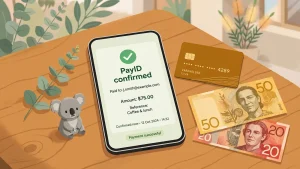
If a withdrawal is pending, note its status and any reference or transaction information available in your account. Ask the operator whether the request is awaiting approval or has already been broadcast to the network. Do not send more money to unlock a stuck withdrawal. A request to pay an additional deposit as a condition of releasing your existing funds is a reason to stop and seek independent advice, not to transfer more.
When a payment does not match your account
For a missing deposit, gather the wallet’s transaction record and the address used, then contact the operator with those details. Address reuse, an underpayment, or delayed detection by the operator can explain why a transfer has not been credited. Avoid making repeated payments while the status of the first one is unclear; doing so can create further losses without resolving the original issue.
For a delayed withdrawal, keep a record of when you submitted the request and any response from the operator. If the operator says it has sent the funds, ask for the transaction reference so you can distinguish an operator review delay from a network transfer. If it has not sent them, ask what stage remains outstanding. Be cautious if explanations keep changing or if you are asked to pay more to access the withdrawal.
Bitcoin transfers can be direct, but they are not reversible and the operator’s internal processing is separate from the blockchain. Checking the destination before sending, retaining transaction records, and refusing to add funds to release a pending withdrawal are practical safeguards—not guarantees of recovery.
Why might a deposit not appear in my account?
Underpayment, address errors, or the operator taking time to detect and credit the incoming payment can cause delays.
Can I reverse a Bitcoin transaction if I make a mistake?
No, blockchain transactions are irreversible; there is no card provider to request a cancellation once a transfer is confirmed.
What should I do if a withdrawal is pending?
Note the status and reference information, then ask the operator if the request is awaiting approval or has been broadcast to the network.
Verification Checks and Bonus Disputes
A withdrawal request can bring identity checks that were not required when an account was opened. Some operators ask for identity and address documents at the first withdrawal; others may trigger that stage after cumulative deposits reach a threshold somewhere between AUD 2,000 and AUD 5,000. The point at which checks begin depends on the operator, so an account that has not yet been asked for documents is not necessarily exempt from them.
Verification may involve several distinct steps: basic registration details, documents confirming your identity and address, and evidence that you control the Bitcoin wallet used to deposit. A crypto-specific check may ask you to sign a message using the deposit address or submit a wallet screenshot showing the outgoing transaction. A specialist review describes these as possible requests, not a standard procedure at every site. Follow the operator’s instructions carefully, and do not send private keys or wallet recovery phrases: those give someone control of your funds and are not proof you should need to provide.
If you are considering an offshore service, read its verification terms before creating an account and check whether the requested documents can be supplied securely. Having the relevant information ready before requesting a withdrawal may avoid one preventable pause, but it does not guarantee approval or payment. A specialist review recommends completing the later verification stages before the first withdrawal, ideally within 24 hours of registration, as a way to reduce a common source of payout delays. Treat that as advice from a review, not a promise that checks will be completed by then or that a withdrawal will follow.
If a request arrives, keep a record of what you submitted and when, and use the operator’s stated support channel to ask which item remains outstanding. A clear explanation should identify the missing requirement rather than ask you to resubmit everything without context. Be cautious if the reason for delay keeps changing or if you are told to deposit more money to release a withdrawal. Do not send additional funds for that purpose. Some operators may use security reviews after a significant win to stall, particularly where an account is new or the withdrawal is the first large one. That possibility does not prove every review is improper, but it is a reason to preserve messages and avoid relying on verbal assurances.

Verification also does not settle disputes about bonus conditions. Before accepting a bonus, read the terms for the wagering contribution assigned to each game. Contributions may differ: the stated terms can assign no contribution to table games and full contribution to pokies, while some high-return slots may be capped at half contribution. If the terms are unclear, ask for the game-by-game rules in writing before wagering. Otherwise, you may discover later that play you expected to count towards a requirement did not count, or counted at a lower rate.
Maximum-bet rules deserve the same attention. Bonus terms may set a maximum stake, and play can be voided for exceeding it. Check how the limit applies while bonus funds or wagering conditions remain active, including whether the rule changes between games or stages. If a dispute arises, save the relevant terms as they appeared when you accepted the offer, along with account statements and support messages. Ask the operator to point to the specific rule and explain how it was applied. Do not assume that a displayed balance means bonus conditions have been satisfied or that a withdrawal has been approved.
These checks and bonus rules sit within a broader risk that matters to Australian residents: Australian consumer protection laws do not apply to offshore operators, and locally licensed online casinos cannot offer real-money pokies to residents. This information is not an invitation to use an offshore service. Anyone who is 18 or older and considering real-money play should understand that verification does not create local consumer protection or remove the risks of an offshore dispute. This page is affiliate material and may include sponsored links.
Can Australians use Bitcoin at online casinos for entertainment?
You can play pokies in free mode without wagering money. For real-money play, Australian law prohibits operators from providing online casino games to people in Australia, although the restriction is directed at operators rather than making an individual player criminally liable.
Is verification required?
Verification may be requested, often at your first withdrawal or after cumulative deposits of AUD 2,000–5,000, depending on the operator. Crypto checks may also involve signing a message from your deposit address or showing the wallet transaction.
Are Bitcoin casinos legit?
The operators discussed hold offshore licences, mainly from Curacao eGaming or the Anjouan Gaming Authority, but those licences do not authorise them to offer real-money casino games in Australia. Australian consumer protection laws do not apply to these offshore operators.