
Check availability before making the trip
Online listings may not reflect current entry or gaming-area availability, so direct venue checks matter when planning a visit.
Check What “Open Now” Means Before You Travel
A listing marked “open” is not the same as confirmation that you can enter and use a venue’s pokies when you arrive. If you are deciding whether to leave now, treat any online status as a prompt to check, not as a guarantee. Contact the venue directly before setting out and ask whether it is open to visitors at that moment.
This matters when you are travelling across Perth, making a detour, or trying to fit a visit around work or other plans. A venue’s general hours can look suitable while its immediate availability has changed. Information displayed on a map, directory or older webpage may not reflect a temporary closure, a change to entry arrangements, or an interruption at the time you intend to go. The practical question is not simply whether the venue normally opens, but whether it is currently receiving patrons.
Use a contact method published by the venue itself where possible. A current official page or direct phone contact is a better starting point than an old listing copied across several directories. If you call, make the question specific: are you open to the public now, and are the gaming areas accessible? A general answer about the venue being open may not settle whether the part you intend to visit is available.
Casinos listed by licence
If you’re looking for pokies options in Perth in 2026, this list gives you a concise starting point for considering operators and checking their details before you play.
-
GoldenCrown
- License
- Curacao Gaming Control Board OGL/2023/176/0095 (Hollycorn N.V.)
You can note GoldenCrown’s stated licence: Curacao Gaming Control Board OGL/2023/176/0095, held by Hollycorn N.V.
-
SkyCrown
- License
- Tobique Gaming Commission
- Payout speed
- crypto ~10-15 minutes, fiat 1-5 days
- Min. deposit
- A$30
SkyCrown lists a Tobique Gaming Commission licence. Its stated payout speeds are around 10–15 minutes for crypto and 1–5 days for fiat, and the minimum deposit is A$30.
-
Playfina Casino
- License
- Curacao eGaming (Hollycorn N.V., since 2017)
- Min. deposit
- A$20-30 (depends on the offer)
Playfina Casino lists a Curacao eGaming licence held by Hollycorn N.V. since 2017. Its minimum deposit is A$20–30, depending on the offer.
-
JustCasino
- License
- Curacao Gaming Control Board
JustCasino lists a Curacao Gaming Control Board licence. That licensing information is the stated detail to consider when you assess the operator.
-
JeetCity Casino
- License
- Curacao eGaming (Dama N.V.)
JeetCity Casino lists a Curacao eGaming licence held by Dama N.V. You can use that licensing detail as a starting point for checking the operator.
-
DragonSlots Casino
- License
- Curacao Gaming Authority (Jumpman Gaming Ltd)
DragonSlots Casino lists a Curacao Gaming Authority licence held by Jumpman Gaming Ltd. Its stated licensing information is the key detail available here.
-
Lucky Dreams
- License
- Curacao
- Min. deposit
- A$20 (POLi)
Lucky Dreams lists a Curacao licence and a minimum deposit of A$20 via POLi. Those details may help you assess whether its stated deposit option suits you.
-
SpinsUp
- License
- Curacao Gaming Control Board OGL/2023/174/0082 (Dama N.V.)
SpinsUp lists Curacao Gaming Control Board licence OGL/2023/174/0082, held by Dama N.V. You can consider this licensing information when reviewing the operator.
-
Wild Tokyo
- License
- Curacao
- Payout speed
- crypto 30-60 minutes, fiat 1-5 days
- Min. deposit
- A$10
Wild Tokyo lists a Curacao licence and a minimum deposit of A$10. Its stated payout speeds are 30–60 minutes for crypto and 1–5 days for fiat.
-
Vegaz Casino
- License
- Curacao OGL/2024/1335/0780
- Min. deposit
- EUR 20
Vegaz Casino lists Curacao licence OGL/2024/1335/0780 and a minimum deposit of EUR 20. Check the deposit currency and amount against your preferences.
If nobody answers, avoid treating silence as confirmation. You can check whether the venue has posted a current update through its own channels, then decide whether to wait, try again, or change your plans. A third-party listing can help you identify a possible contact, but it should not be the final basis for a trip when immediate access matters.
It is also worth separating access from preference. A venue may be open while the area or service you had in mind is unavailable, or entry may depend on conditions you have not checked. Ask plainly rather than assuming that a venue-wide status covers every facility. If your plans depend on a particular arrangement, confirm that detail with staff before travelling. Do not infer access from photographs, promotional material, old visitor comments or a general “open” label.
People looking for an early or late visit should take the same approach. A result suggesting that a venue may suit those hours does not establish that it is open at the time you are ready to go. Confirm the current status close to departure, particularly if the trip would be inconvenient to reverse. If you cannot verify it, build in a backup plan that does not depend on reaching a particular venue.
When you contact staff, identify the venue clearly and explain that you are checking before making the trip. If you have a specific concern about access, ask it directly rather than relying on a broad question about opening. You can also confirm whether the information applies to visitors arriving at your intended time, not just to the venue’s general operating status. A clear answer helps you decide whether to set out; an unclear answer is a reason to pause and check again.
Keep the call focused and brief. You do not need to rely on an unfamiliar directory’s interpretation of “open now”; ask the venue directly and listen for a clear answer about present entry. If the response is uncertain, take it as uncertainty rather than reassurance. This small check can save a wasted journey without requiring you to assume that any Perth venue is available.
A status check is time-sensitive, so a confirmation made much earlier may no longer answer the question by the time you leave. If plans change or there is a substantial delay, check again. That is especially sensible when you are travelling a long way or have arranged other parts of the day around the visit. Keep the information you rely on current, and do not let a label substitute for a direct confirmation.
This approach does not tell you which venue to choose or how long it operates on a normal day. It is simply a way to establish whether a visit is possible now. Once you have confirmed that, you can make your travel decision with fewer assumptions and avoid setting off on the strength of a status indicator alone.
DO
- Contact the venue directly to confirm they are open to visitors.
- Ask specific questions about the accessibility of gaming areas.
- Verify current status close to your departure time.
DON'T
- Treat online "open now" statuses as a guarantee of entry.
- Assume a general venue opening means all facilities are available.
- Rely on third-party listings as the final basis for a trip.
If staff confirm that the venue is open, consider whether you can still reach it as planned and whether you have enough time for the visit. If they cannot confirm access, wait for clearer information rather than treating an old listing as an answer. That keeps the decision tied to what the venue says about the present moment, rather than to a schedule or status that may not apply when you arrive.
What a Pokie’s Return Figures Can—and Cannot—Tell You
When you compare claims about the best-paying pokies in Perth, a return-to-player figure can look like a straightforward way to judge one game against another. It is more useful as a description of a game’s configured return rate than as a forecast of what you will receive. It cannot tell you whether your next spin will win, how long a session will last, or whether you will leave ahead.
There is also a detail that can make comparisons less direct: a specialist review reports that some game providers let casinos choose between different RTP settings for the same pokie. If that applies, the title alone does not establish which return figure is in use at a particular venue. The same game could be configured differently in different places. A figure without clear information about the setting may therefore tell you less than it appears to.
That distinction matters when you see a claim that a game “pays well”. Ask what the claim is actually describing. Is it a published return figure for a particular configuration, or a comment based on someone’s experience? Those are not interchangeable. A person’s recent win or losing streak does not verify a game’s return setting, and an advertised or quoted figure does not predict the result of an individual visit.
A pokie uses a Random Number Generator, and every spin is an independent random event. The outcome of one spin does not make a win on the next spin more likely, nor does a run of losses mean that a win is due. Likewise, a recent win does not indicate that the game is now less likely to pay. It is tempting to read a sequence as a pattern, especially when you are watching the reels closely, but each spin stands on its own.
This is why return figures cannot be used as a short-term ranking of venues or as a promise of a particular result. Even if two settings have different stated return percentages, that difference does not tell you what will happen during a brief session. It also does not mean that a game with a higher quoted figure will provide a better outcome for you on a given day. The figure describes the configured game, not your personal result.
If you are comparing Perth casino pokies, keep the question narrow: is the return information specific to the actual setting, and is the source explaining what it represents? If the setting is unknown, the comparison is incomplete. If the claim rests on a player’s anecdote, treat it as an account of that experience rather than evidence about the game’s long-term return. Neither is a reason to assume a particular machine will pay.
Searches for the best pokies in Perth or the best-paying games can suggest that a dependable winner is waiting to be identified. Return information cannot support that conclusion. It may help you understand a stated game characteristic, but it cannot identify a reliable way to win, and it cannot remove the uncertainty built into each spin.
The same caution applies to claims made about pokies in Perth city or the CBD. A location does not, by itself, establish a game’s RTP setting. Nor does a game’s name prove that the same configuration is present wherever it is offered. If someone presents a percentage without explaining its source and setting, do not treat it as a personal forecast.
A useful reading of return figures is therefore modest: they may describe a particular configuration, if that configuration is known. They do not tell you what your next spin will do, and past outcomes do not change the randomness of the next one. Keep that boundary in mind when weighing claims about which pokie pays best.
Venue Reporting and the New Responsible-Gambling Duties
When comparing Perth venues, it is useful to distinguish a venue’s gaming offer from the systems it is expected to use when gambling harm may be emerging. Reporting on new responsible-gambling duties describes requirements for larger venues, including staff coverage and a formal record of incidents. These are matters of venue oversight, not a measure of how often a pokie pays or whether a particular venue will suit you.
A report by regionriverina.com.au says that, from 1 July, a venue operating more than 20 gaming machines must have a dedicated responsible gambling officer (RGO) on duty for as long as those machines are running. The threshold matters: the reported duty is tied to the size of the machine operation, rather than applying automatically to every venue with pokies. The report also describes a one-month transition period for venues to remove signage and put the officer arrangements in place.
For you, the practical point is that an RGO is part of the venue’s responsibility while gaming machines are operating. If you want to understand what support is available at a particular Perth venue, ask how to identify the officer on duty and how staff respond when a patron appears distressed or unable to stop. A clear answer can tell you more about the venue’s process than a general claim that it takes responsible gambling seriously. It does not, by itself, establish that a venue is free of risk or that every concern will be resolved in a particular way.
The same report says venues are to keep a gambling incident register. It is intended to capture relevant occurrences, including behaviour that suggests a patron may be at risk of gambling harm or already affected by it. A register creates a record for the venue rather than leaving each incident as an informal conversation. In principle, that can help staff document concerns and how they were handled; it should not be read as a guarantee that harm will be prevented or that every patron’s situation will be the same.
These duties are best understood as organisational safeguards. They are not a recommendation to visit a particular venue, and they do not identify which Perth location has a particular number of machines. Nor does the existence of a register tell you how many incidents have occurred or what action followed. Those details should not be assumed from the rule itself.
If you are assessing a venue, you can ask whether it has an RGO while its machines are operating, how patrons can contact that person, and how staff record and respond to incidents. Keep the question specific and judge the answer on its clarity. A staff member should be able to explain the relevant process without making you feel pressured to continue gambling.
The report’s description should not be treated as confirmation of the arrangements at an individual Perth venue. Requirements and implementation can depend on the applicable rules and the venue’s circumstances, so check directly with the venue or the relevant regulator if you need a definitive answer. What matters for a visit is not just whether a venue has pokies, but whether you can find out who is responsible for responding when gambling stops feeling manageable.
Planning a Visit Near Perth Airport or the CBD
“Near” can mean different things when you are planning a trip. A venue may appear close to Perth Airport or central Perth on a map but still be awkward to reach from your starting point, depending on the route and how you are travelling. Before choosing a destination, check its exact street address and compare the journey from the place you will actually be leaving from—not just the distance shown between two map pins.
Airport-related wording needs particular care. A result described as being near Perth Airport does not, by itself, establish that it is inside an airport terminal or even within the airport precinct. If you want to visit somewhere before or after a flight, identify the exact departure or arrival point and check the route from there. Allow for the fact that a trip to an airport-area address may involve a different journey from one to a terminal. Do not rely on a broad label such as “Perth Airport” as a substitute for a street address.
The same principle applies when you are looking around the CBD. “Central Perth” and “near the CBD” are broad descriptions, not precise locations. Check where the address sits in relation to your accommodation, workplace or planned route. A place that is convenient on foot may not be convenient if you are carrying luggage or travelling from elsewhere; a destination that looks close on a map may require a less direct trip than you expect. The map is a planning aid, not confirmation that a venue is suitable for your journey.
If you are travelling from North Perth or another suburb, start with that suburb as your origin rather than treating central Perth as the default. Decide whether you are looking for somewhere close to where you already are, or somewhere along the route to another destination. That distinction can change which locations make sense. For a “near me” result, check that your device is using the location you intend; if location access is unavailable or inaccurate, enter the suburb or a nearby landmark manually.
Be alert to place-name ambiguity as well. A result containing “Perth” may refer to a location other than the one you mean, and a place label alone does not confirm the state or the address. Read the full listing and verify its location on a map before setting off. If a result mentions a nearby suburb or an area such as Parkes, do not assume that the wording identifies a particular venue or proves how far away it is. Treat it as a prompt to check the address, not as a travel instruction.
- Confirm the exact street address of the venue.
- Compare the journey from your actual starting point.
- Check the specific route for public transport, taxi, or lift.
- Verify if the location is in the intended suburb or area.
For a practical comparison, use the same starting point for each destination and consider the actual route, not just the apparent map distance. Check whether the address fits your plans for the day, including any onward travel. If you are relying on public transport, a taxi or a lift, confirm the route with the relevant provider or service before leaving; a map listing alone cannot tell you whether a particular option will suit your trip.
Keep the decision simple: establish the exact location, compare the journey from your real starting point, and make sure the address matches the area you meant. That is more useful than relying on labels such as “near Perth,” “airport” or “central,” which can describe a search area rather than a precise destination.
What You Can Verify Before Visiting Crown Perth
If you are considering a visit to Crown Perth, treat the venue’s own current information as the starting point, not an assumption based on a listing, an old review or a photo. A page describing the property does not, by itself, confirm which gaming areas or machines are available when you plan to go. Check directly with the venue before making a trip, and make sure the information applies to the date and time you have in mind.
Be precise about what you need confirmed. If your interest is the pokie offering, ask whether the relevant gaming area is operating and whether the type of experience you are looking for is available. Avoid relying on a search snippet or a third-party description to answer that question: those can be incomplete or out of date. If you cannot get a clear answer, plan on the basis that availability is uncertain rather than treating silence as confirmation.
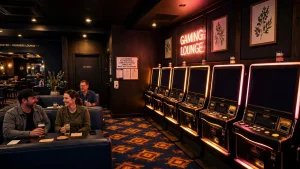
The same care applies to practical details. Ask the venue about any entry conditions or access arrangements that matter to your visit, and confirm them through an official channel. If you are travelling with someone, check whether the information covers their circumstances too. A detail that seems minor online can affect whether the visit works for you, so it is better to clarify it before setting out than to rely on assumptions at the door.
Some people want to know whether a particular room is the “best” place to play. That label is subjective and does not establish what machines are present, what they return, or whether a particular option will suit you. Decide what matters to you, then ask only for details the venue can confirm. Treat promotional language and personal accounts as opinions, not as proof of a specific offering or outcome.
If you are asking about the maximum cash payout from a pokie, do not assume there is one figure that applies across the venue or to every machine. Ask Crown Perth whether a payout limit applies to the machine or game you are considering, how it is defined, and where the current terms can be read. If the answer is not clear, request clarification before playing. A headline figure without its conditions may not tell you what would happen in your circumstances.
Keep a record of the information you are given, including where it came from and when you checked. If staff direct you to written terms, read those rather than relying on a verbal summary. Details can change, and a previous visit or an older online post cannot confirm today’s arrangements.
This approach does not establish that a particular pokie, room, facility or payout is available. It gives you a way to separate confirmed details from assumptions before choosing whether to visit. If the answer affects your decision and you cannot verify it, waiting until you can is more reliable than travelling on a guess.
Online Pokies and the Limits of Australian Consumer Protection
A website offering real-money pokies can look local because it mentions Perth, uses Australian currency or accepts Australian customers. Those details do not make it an Australian casino or bring it under local consumer protection.
Under the Interactive Gambling Act 2001, operators cannot provide real-money online casino games to people in Australia without a domestic licence. No Australian licences for online casinos have been issued. The restriction applies to the provider, not to an individual player: the law does not make you criminally liable simply for playing on an offshore site that accepts Australian customers.
That distinction is important, but it is not a safeguard for your money. If an offshore casino refuses to pay winnings, Australian players have no legal recourse in Australia to compel payment. A site’s terms, customer support and promises about withdrawals are not substitutes for a local route to resolve a dispute. If a problem arises, you may have little practical leverage over a business operating outside the Australian system.
The Australian Communications and Media Authority (ACMA) enforces the Interactive Gambling Act and blocks access to illegal offshore gambling sites. Internet service providers must comply with its blocklist. A site being reachable at a particular moment does not mean it is permitted to serve Australians, has been approved locally or will remain accessible. Nor does an offshore operator’s own licensing claim give you the protections of an Australian-licensed online casino; there is no such casino in Australia.
Promotional language can obscure these differences. Offers described as no-deposit bonuses, high limits or “best paying” pokies do not establish that a service is lawful in Australia, that winnings will be paid, or that you can challenge a refusal through Australian channels. Treat claims about access or payouts as claims made by the operator, not as evidence of local oversight. This is especially relevant when a site uses Perth wording to suggest that its online service is based nearby.
If you are considering real-money online pokies from Perth, the central risk is not only whether you can open a website or place a bet. It is what happens if the operator disputes your identity, interprets its terms against you or withholds a withdrawal. In that situation, Australian consumer protections may not offer a practical remedy against an offshore casino. The fact that the law targets operators rather than players does not remove that financial risk.
Keep the distinction clear: an operator’s provision of real-money online casino games to Australians without a domestic licence is illegal, while an individual player is not the target of that prohibition. But an offshore site accepting you is not a locally protected alternative. If you want the protections that come with Australian consumer law, do not assume an online service can provide them; no Australian-licensed online casino is available.
Why a 24-Hour Label Needs Checking
A listing that describes a Perth venue as open around the clock is making a specific claim about its regular schedule. Treat that wording as something to confirm, not as a guarantee that the pokies are available at every time of day or night. A venue’s general opening schedule and access to a particular area or service are not necessarily the same thing.
Checking 24-Hour Labels
Before assuming a venue is open all night, contact them to confirm if the pokies area specifically is accessible throughout those hours.
General opening schedules may differ from the availability of specific services or gaming areas.
Before planning a late-night or early-morning visit, contact the venue directly and ask about its current regular hours. Be precise about what you need to know: whether the venue is open, whether the area with pokies is accessible throughout that period, and whether any part of the schedule changes on particular days. A broad “open 24 hours” label may not answer those questions.
It also helps to distinguish a regular schedule from a momentary status. A venue might publish hours intended to describe its usual operation, while a temporary change can affect a particular visit. Checking a schedule therefore serves a different purpose from confirming that the doors are open when you are about to leave. Neither assumption should be based solely on a short label copied across listings.
If you are comparing venues, look for information published by the venue itself and check when it was last updated. If the wording is unclear, ask for the hours that apply to the pokies area rather than relying on a general description of the premises. You can also ask whether the schedule differs on public holidays or other specified dates; do not assume that a regular pattern covers every occasion.
The phrase “24-hour pokies in Perth” can make uninterrupted access sound settled, but it is only useful if the schedule actually applies to the facilities you intend to use. A careful check can prevent a wasted journey and spare you from making plans around an assumption. If you cannot get a clear answer, make a different plan rather than treating the label as confirmation.
Perth CBD Clubs: Use Responsible-Gambling Tools
If you are considering a visit to a Perth CBD club, think about your limits before you arrive. Deposit limits, loss limits, session time limits and self-exclusion are recognised responsible-gambling tools. Whether a particular venue offers or can apply a specific measure is something to confirm directly; do not assume it is available just because it is a standard tool.
A deposit limit can place a boundary on how much you put into play. A loss limit focuses on the amount you are prepared to lose, while a session time limit can help you decide when to stop. These are different controls, so consider which one addresses the risk you are concerned about. If you choose a limit, set it before playing rather than changing it in response to how a session is going.
Self-exclusion is a stronger step: it is intended to prevent you from gambling at the places or services covered by the arrangement. Ask the venue how its process works, what it applies to and what you need to do to activate it. If you are already finding it difficult to stop, you do not need to wait until a visit becomes a crisis to ask about this option.
Do not treat one safeguard as a substitute for another. A time limit does not control spending, and a spending limit does not necessarily end a session. You may decide that the safest choice for you is not to play; these tools are there to support boundaries, not to make gambling risk-free.
- BetStop
-
A service that applies to Australian-licensed operators, which may not necessarily bind offshore gambling sites.
BetStop is a separate service: it applies to Australian-licensed operators and does not bind offshore sites. It should not be assumed to exclude you from a land-based club. Check the scope of any exclusion directly with the organisation responsible for it, and avoid relying on a tool whose coverage you have not confirmed.
When comparing Perth CBD clubs, the useful question is not which venue sounds most appealing, but whether you can understand and use the safeguards that matter to you. If staff cannot clearly explain a limit or exclusion process, pause before playing and seek clarification. Your plan should remain yours, even after you enter a venue.
Perth, Western Australia, and Searches for South Australian Pokies
Perth is in Western Australia, while South Australia is a separate state. If you are looking for pokies in Perth, information about South Australian venues will not tell you what is available in the city. A result mentioning South Australia may relate to a different place, even if the wording also includes Perth.
Check the location attached to any venue information before relying on it. A state name, suburb or address can help distinguish a South Australian listing from one in Perth. This matters when a page uses broad regional wording or discusses venues without making their location clear. Do not treat a reference to South Australia as evidence that a venue is in Perth.
The distinction also applies when you are checking whether a South Australian venue is open. Its status is relevant to that venue and location, not to Perth. If your destination is in Perth, use details that identify a Perth address rather than assuming that information for another state applies.
For a search focused on Perth, keep the place you intend to visit at the centre of your checks. If you are considering South Australia instead, confirm that the information refers to that state and make travel decisions accordingly. Similar wording does not make the two locations interchangeable.
There is also a basic age requirement to keep in mind. In Australia, you must be at least 18 to gamble, including on pokies. This applies regardless of whether you are considering a venue in Western Australia or South Australia. If you are not yet 18, you cannot legally gamble there.
Keeping the location and age requirement clear helps you interpret venue information without confusing one state’s listings with another’s.
Cashless Searches and the Limits of Payment Information
When looking into cashless play in Perth, separate a venue’s payment arrangements from the way bank transfers work. PayID is an alias layer for the New Payments Platform (NPP): it lets someone direct a transfer using an email address, mobile number or ABN instead of entering bank-account details. It is not, by itself, proof that a particular venue accepts cashless payments for play.
The NPP is supported by all major Australian banks and uses end-to-end encryption. Those features describe the transfer system; they do not confirm what payment methods a venue offers, whether a payment will be accepted for a particular purpose, or what conditions apply. Before travelling, ask the venue directly whether it supports the cashless option you have in mind and what its process involves. Do not infer that from a PayID reference elsewhere.
PayID also says nothing about the legal status of an online service. A payment method is not a licence, and its presence should not be treated as evidence that an online gambling operator is authorised or that its games are fair. Keep payment details separate from questions about legal protections and the service itself.
If you are weighing Perth against Newcastle, remember that they are distinct locations, not two names for the same local area. Check which city a venue or payment claim actually concerns before relying on it. A result mentioning cashless play may describe a transfer facility, a venue-specific arrangement or something else entirely; the wording alone cannot establish that you can use it at a Perth venue.
The useful check is a direct one: confirm the venue’s current payment arrangements, and do not treat PayID support as proof of cashless play or online legitimacy.
What is the legal age for online gambling in Australia?
You must be at least 18 years old to gamble online in Australia.
Are online pokies legal for Australian players?
You can legally play on offshore sites that accept Australian players, but offering real-money online pokies to Australians without a domestic licence is illegal, and no Australian online casino licences have been issued. If an offshore casino refuses to pay, you have no legal recourse in Australia.
Can casinos change the RTP of their games?
Yes. Some providers let casinos select from different RTP settings for the same game, so check which setting applies at the casino you use.