
Check the Venue Before You Make the Trip
Opening hours, gaming-area access and listings can differ, so verify the details directly with the venue before planning a visit.
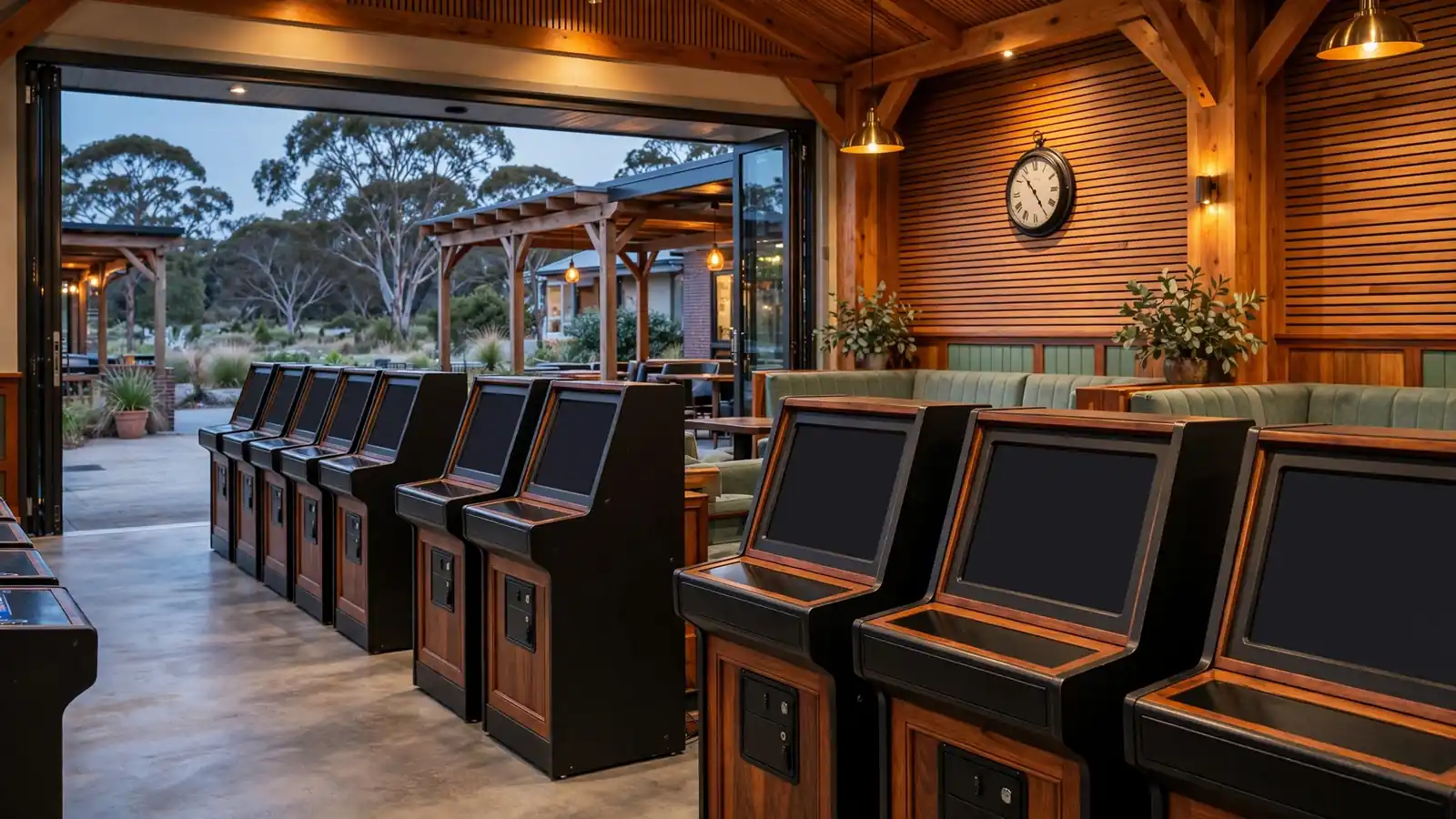
Checking Canberra Venue Hours Before You Go
If you are planning to visit a Canberra venue, check its hours for the day and time you intend to arrive rather than relying on a general listing. A venue’s normal schedule may not reflect a public holiday, a private event, a temporary change or the hours of a particular area inside the premises. Even when a building is open, that does not by itself confirm that its gaming machines are available to use.
Start with the venue’s own website, if it publishes opening hours. Look for a page that appears current and gives separate information for different days. Read the details rather than relying on a short summary: one schedule may describe the broader venue, while another may refer to dining, reception or a particular service. If the information is unclear, contact the venue directly and ask whether the relevant area will be open at your planned arrival time.
A direct call is especially useful when your plans depend on an early or late visit. Ask a precise question: is the venue open then, and will the area you intend to visit be accessible? If you are travelling on a holiday or around a scheduled event, mention the date. A general answer about usual hours may not settle whether an exception applies on that particular day.
Casinos listed by licence
If you’re looking for pokies options to consider in Canberra in 2026, it’s worth checking the details behind each operator before you choose. Use this list as a starting point and confirm that the games and terms suit you.
-
GoldenCrown
- License
- Curacao Gaming Control Board OGL/2023/176/0095 (Hollycorn N.V.)
GoldenCrown is listed with a Curacao Gaming Control Board licence, OGL/2023/176/0095, held by Hollycorn N.V.
-
SkyCrown
- License
- Tobique Gaming Commission
- Payout speed
- crypto ~10-15 minutes, fiat 1-5 days
- Min. deposit
- A$30
SkyCrown is licensed by the Tobique Gaming Commission. Its stated payout times are around 10–15 minutes for crypto and 1–5 days for fiat, and its minimum deposit is A$30.
-
Playfina Casino
- License
- Curacao eGaming (Hollycorn N.V., since 2017)
- Min. deposit
- A$20-30 (depends on the offer)
Playfina Casino has a Curacao eGaming licence held by Hollycorn N.V. since 2017. Its minimum deposit is A$20–30, depending on the offer.
-
JustCasino
- License
- Curacao Gaming Control Board
JustCasino is listed with a Curacao Gaming Control Board licence.
-
JeetCity Casino
- License
- Curacao eGaming (Dama N.V.)
JeetCity Casino is listed with a Curacao eGaming licence held by Dama N.V.
-
DragonSlots Casino
- License
- Curacao Gaming Authority (Jumpman Gaming Ltd)
DragonSlots Casino is listed with a Curacao Gaming Authority licence held by Jumpman Gaming Ltd.
-
Lucky Dreams
- License
- Curacao
- Min. deposit
- A$20 (POLi)
Lucky Dreams is listed as Curacao-licensed. Its stated minimum deposit is A$20 via POLi.
-
SpinsUp
- License
- Curacao Gaming Control Board OGL/2023/174/0082 (Dama N.V.)
SpinsUp is listed with a Curacao Gaming Control Board licence, OGL/2023/174/0082, held by Dama N.V.
-
Wild Tokyo
- License
- Curacao
- Payout speed
- crypto 30-60 minutes, fiat 1-5 days
- Min. deposit
- A$10
Wild Tokyo is listed as Curacao-licensed. Its stated payout times are 30–60 minutes for crypto and 1–5 days for fiat, with a minimum deposit of A$10.
-
Vegaz Casino
- License
- Curacao OGL/2024/1335/0780
- Min. deposit
- EUR 20
Vegaz Casino is listed with a Curacao licence, OGL/2024/1335/0780. Its stated minimum deposit is EUR 20.
Online business listings can help you find contact details, but treat their hours as a starting point, not a guarantee. Listings can remain visible after information has changed, and a displayed schedule may not explain temporary closures or differences between areas. Compare it with the venue’s own published information where possible. If the two disagree, contact the venue rather than assuming the longer opening period is correct.
Social media can also carry notices about temporary changes, but check when a post was published and whether it refers to the date you plan to visit. An old announcement may describe a one-off arrangement that no longer applies. A recent post may be more useful, though a quick confirmation from the venue is still sensible if a change would disrupt your plans.
Confirm the hours that matter
Before setting out, make sure you have answers to the practical points that affect your visit:
- Is the venue open on the specific day you plan to go?
- Do the published hours cover the area you intend to use, or only the premises generally?
- Is there a temporary change or closure on that date?
- If you expect to arrive near opening or closing time, can staff confirm that access will still be available?
These questions help distinguish a venue’s general opening schedule from the hours of a particular service or area. A listing that says a venue is open does not necessarily answer every question about what is accessible inside it. Where a venue cannot confirm that detail, treat the uncertainty as a reason to check again before travelling.
For an unplanned visit, avoid reading “open now” as a promise that the information is live. A listing may be based on a regular timetable and may not update immediately when circumstances change. Check the venue’s current notices or call before making a special trip. If you cannot get confirmation, plan around the information you can verify rather than assuming that access will be available.
It also helps to keep a note of where the hours came from and when you checked them. If you are travelling some distance, confirm close to departure rather than depending on information saved earlier. If staff give you a particular answer by phone, make sure you have understood whether it applies to the whole venue or only to a named area.
Opening hours are a practical planning detail, not a complete account of the conditions that apply at a venue. They cannot establish whether a gaming area is operating, whether you meet entry requirements or what safeguards apply while machines are in use. Keep those questions separate from the simple check of whether the doors are open. That distinction can prevent an avoidable journey without treating a published timetable as proof of anything beyond the hours it actually describes.
Do
- Contact the venue directly to confirm hours
- Check the venue's own website for current details
- Verify the specific area you intend to visit
Don't
- Rely on general online business listings
- Assume "open now" means the information is live
- Assume a building being open means gaming machines are available
What Pokie Return Percentages and Randomness Can—and Cannot—Tell You
A return-to-player percentage, or RTP, is a measure of a pokie’s potential return over play, not a promise about what you will receive. It can help describe a game’s designed return profile, but it cannot tell you whether your next spin will win, how long a session will last, or what your final balance will be. A figure presented as a guide to paying potential should not be mistaken for a prediction about an individual visit.
There is another detail worth checking: the same pokie may not have the same RTP everywhere. A specialist review reports that some game providers let casinos choose among different RTP settings for a particular game. That means a title’s familiar name or appearance alone does not establish which return setting applies at a particular casino. If a percentage is published, look for information tying it to the exact game version and setting, rather than assuming a figure found elsewhere applies to the same game in Canberra.
This distinction matters when comparing claims about the best-paying pokies in Canberra. A list or description may look precise because it gives a percentage, but the number is useful only if you know what it refers to and where the setting applies. Without that context, comparing two figures may be comparing different configurations—or a figure that does not describe the version available to you. A claim about RTP also says nothing by itself about whether a particular session will produce a return.
RTP is not a schedule that pays back a set share of your stake after a certain number of spins. It does not mean that a pokie owes you a win after a run of losses, or that a win is due because you have played for a long time. A high-looking return figure cannot make a particular outcome more likely on the next spin. Treat it as information about the game’s potential return profile, not as a way to time play or estimate a personal result.
Each spin is generated separately by a Random Number Generator (RNG). In practical terms, the result of one spin does not set the result of the next. A previous win does not make another win more likely, and a streak of losses does not mean that the game must soon pay. The sequence can appear to form a pattern, but past outcomes do not provide a reliable signal about what comes next.
This is why stories about a pokie “being hot” or “due” are not a sound way to judge its paying potential. A recent result may be memorable, especially if someone nearby has won, but it does not change the independent random process for your next spin. The same applies when you see a machine that has been played for some time: the visible history cannot establish what will happen to you.
For anyone comparing pokies in Canberra or reading claims about a casino’s selection, separate three questions. Is the stated RTP linked to the specific game and setting? Does the claim explain what the percentage measures? And is it being presented as general information rather than a promise about your likely outcome? If those points are unclear, the figure is not a dependable basis for predicting a result.
RTP and randomness answer different questions. RTP describes a game’s return profile; the RNG determines each spin’s outcome. Neither provides a reliable forecast for an individual session. So if you are looking for the best pokies in Canberra, be wary of descriptions that turn a percentage into a guarantee, imply that past results predict future ones, or treat one reported setting as universal. A number can inform you about a game, but it cannot tell you what your next spin will do.
The Legal Limits on Online Pokies for Australian Players
The rules for online pokies in Australia distinguish between the company providing a service and the person using it. Under the Interactive Gambling Act 2001, offering real-money online casino games to people in Australia without a domestic licence is illegal for operators. No Australian licences for online casinos have been issued, so there is no Australian-licensed online casino.
That distinction matters if you are considering an online service while in Canberra. The law is directed at operators, not individual players; players are not subject to a penalty simply for using an offshore site. But that does not make an offshore casino a locally regulated or protected option. A site may accept Australian customers without having a licence to provide its service here, and access or acceptance does not establish that it complies with Australian law.
If you encounter a site describing itself as an online casino for Canberra residents, treat the wording as a claim, not proof of local authorisation. There is no domestic online-casino licence for it to hold. A foreign licence, if a site says it has one, is not an Australian licence and does not give you the protections of Australian regulation.
What can go wrong with an offshore site
The main practical risk is what happens when there is a dispute. If an offshore casino refuses to pay winnings, Australian players have no legal recourse in Australia to compel payment through a local online-casino regulator. The operator may be based overseas, and a player may find it difficult to establish which authority can address a complaint or enforce an outcome.
A polished website, Canberra-related wording, or an offer framed as a no-deposit bonus does not change that position. Nor does the availability of high-stakes options establish that a service is lawful or dependable. Before sharing personal or payment information, consider whether you can identify who operates the site and what practical route would remain if access were blocked, an account were closed, or a withdrawal were refused. These are consumer-protection questions, not signs that the service is approved.
The same caution applies to claims that an online service is the best-paying option for people in Canberra. A promotional claim cannot create an Australian licence or provide a local avenue for resolving a payment dispute. Do not treat the language of an advertisement as evidence of legal status.
Legal Risk
Offshore casinos are not regulated by Australian law, meaning you may have no legal recourse to recover winnings in a dispute.
Access can be restricted
The Australian Communications and Media Authority (ACMA) enforces the Interactive Gambling Act 2001. It blocks access to illegal offshore gambling sites, and internet service providers must comply with ACMA’s blocklist. As a result, a site that appears accessible at one point may later be blocked. A changing web address or a suggestion to use another route around a block does not resolve the underlying legal or consumer-protection concerns.
Be wary of anyone presenting continued access as proof that an offshore site is authorised. Blocking is part of enforcement; it is not an endorsement of services that remain reachable. Similarly, a site’s willingness to register Australian users should not be confused with permission to offer real-money online pokies in Australia.
If your interest is in pokies in Canberra, separate physical venues from online services: the rules described here concern online gambling, not whether a local venue is open or what it offers. For online play, the key point is straightforward: operators cannot lawfully provide real-money online casino games to people in Australia without a domestic licence, and there is no such licensed online casino. A player is not the target of that operator rule, but using an offshore site can still leave you without Australian recourse if something goes wrong.
Planning a Visit Near Canberra Airport or the CBD
A map search can help you identify possible venues, but a nearby pin does not confirm that a particular place has pokies or that visitors can use them. Treat location results as a starting point, not as confirmation. Before setting out, check the venue’s own current address and contact details, then ask directly whether gaming machines are available to visitors.
Be precise about the area you mean. “Near Canberra” could refer to different suburbs or surrounding places, while an airport or CBD search may return results outside the area you intended. Check the full street address and suburb, and make sure the listing refers to a physical venue rather than a general business entry, an outdated page or an online service. If a result is labelled “Canberra” but gives another town or region, resolve that mismatch before travelling.
For a trip near Canberra Airport, confirm the venue’s address independently rather than relying on a map’s distance label. A result appearing near an airport does not establish that it is inside the airport, open to travellers or equipped with pokies. The same care applies to CBD and North Canberra searches: a suburb name or “nearby” tag is not proof that gaming machines are available at the listed address.
If you are travelling from elsewhere, check that the location is in the place you intend to visit. A search result can be ambiguous when a location name is paired with a state abbreviation or a broad regional label. Compare the address across the venue’s own information and a mapping service, and contact the venue if the details do not match. This can prevent a wasted journey based on a listing that points to the wrong place.
Eligibility is separate from proximity. In Australia, you must be at least 18 to gamble, including on pokies. If you are close to that age threshold or are visiting with someone younger, do not assume that being admitted to a venue means every area or activity is available to everyone. Ask the venue about its entry and gaming-area requirements before making plans, and check what proof of age it accepts if that is relevant to you.
- Confirm the exact physical address
- Verify that gaming machines are available at this location
- Check for any specific entry or age requirements
You can keep the check simple: confirm the exact address, ask whether pokies are available at that location, and clarify any entry or age requirements that could affect your visit. If the venue cannot give a clear answer, avoid treating a search result as a substitute for confirmation. A little checking beforehand helps you distinguish a genuinely relevant location from a listing that merely appears close on a map.
What to Check About Canberra Pokies Venues
When comparing Canberra venues, focus on what can be confirmed about the place itself rather than treating a listing or a polished description as evidence of good safeguards. A venue’s size matters for one specific responsibility: the reported requirement for a dedicated responsible gambling officer applies only where a venue has more than 20 gaming machines. It is not a blanket rule for every venue with pokies.
A report by regionriverina.com.au says that, from 1 July, a venue above that machine threshold must have an RGO on duty whenever its gaming machines are operating. The threshold and the operating-hours condition are important. A venue with fewer machines is not shown by this requirement to need a dedicated RGO, and the rule does not mean every Canberra venue has one. If this detail affects your decision, ask the venue whether the requirement applies to it and how you can contact the RGO while machines are in use.
The role is relevant when a patron’s behaviour suggests gambling may be causing harm. You can ask how staff respond if someone appears distressed or unable to stop, and whether there is a clear way to request support. Treat a direct, specific answer as more useful than general wording about being responsible. The existence of a role or policy does not tell you how a particular interaction will be handled, so it is reasonable to clarify the practical process before you settle in.
The same report describes a requirement for venues to maintain a gambling incident register. The register is intended to document occurrences, including situations in which a patron’s behaviour indicates they may be at risk of harm or already affected by it. This is a record-keeping responsibility, not a public scorecard or a promise that a venue will prevent every problem. You can ask whether staff know how to respond to a concern and how incidents are recorded, without expecting access to other patrons’ private information.
For a venue-level check, keep your questions narrow: how many gaming machines are in operation, whether a dedicated RGO is required there, who to approach if you need assistance, and whether staff follow an incident-recording process. Answers should be consistent and practical. If staff cannot explain who handles a concern, that is useful information for your decision; it does not by itself establish that a venue has breached a rule.
These safeguards are only one part of assessing a visit, and they do not establish that one Canberra venue is the best choice. A venue name, a club label or a prominent listing cannot substitute for checking how responsibilities apply at that particular place. Look for clear information about the venue’s own arrangements, and take time to decide whether the setting feels appropriate for you.
Why “24-Hour Pokies” Searches Need a Venue Check
A listing that mentions pokies and late opening does not, by itself, establish that machines are available throughout the night. An all-night search is asking something more specific than ordinary opening hours: whether a venue is open at the time you plan to go and whether its gaming area is operating then. Treat those as separate details to confirm rather than reading “open” as a promise of continuous access.
Online listings can be incomplete or out of date, and search results may use broad labels that do not explain what parts of a venue are operating. Before making a trip, check the venue’s own current information and contact it directly if the listing leaves the hours unclear. Ask specifically about access to the gaming machines during the period you have in mind. If you cannot get a clear answer, do not treat a general opening-hours entry as confirmation of overnight access.
The words “open now” can also be misleading when you are planning ahead or relying on a listing that has not been updated. Check the time the information applies to, and confirm again close to your visit if all-night access is important to your plans. This is a practical check, not evidence that any particular Canberra venue operates around the clock.
Opening schedules are also different from requirements that apply when gaming machines are operating. A report by regionriverina.com.au described a one-month grace period for venues to remove signage and introduce responsible gambling officers. That transition period concerns the introduction of those safeguards; it does not set a venue’s opening hours or mean that a gaming area stays open during the night.
The requirement described in the report applies to venues with more than 20 gaming machines: a dedicated responsible gambling officer must be on duty while those machines are operating. The grace period should therefore not be mistaken for an extension of machine access, a temporary overnight schedule, or confirmation that a venue has a particular number of machines. For your plans, rely on a direct answer about the hours of the gaming area, not on assumptions drawn from a safety requirement or a broad listing.
If an all-night visit matters, make that the exact point you verify. A venue may have general opening information without stating machine hours, and a result that appears to answer a question about 24-hour pokies may not settle it. Clear confirmation of the relevant operating hours is the useful detail; without it, avoid assuming overnight access.
Canberra Crown Searches: Verify the Venue Before You Rely on a Listing
A Crown-branded listing can make it seem as though there is a Crown casino or pokies room in Canberra, but a name appearing online is not proof that a venue operates there. Treat the identity and location as questions to verify before making plans. Do not assume that a listing refers to a Canberra venue simply because it combines Crown with Canberra or pokies.
Verifying Crown Listings
Do not assume a listing refers to a Canberra-based venue just because it mentions the Crown brand. Always check for a specific physical address in Canberra and verify the information through the venue's own official channels rather than third-party directories.
Check whether the information identifies a physical address in Canberra and whether it comes from the venue itself or from a third-party directory. If the address, operator or description is unclear, pause rather than filling in the gaps. A listing may be incomplete, out of date or referring to something other than a local gaming venue. Those possibilities are reasons to verify, not grounds to infer that a particular Crown venue exists.
The same care applies when looking for a “best pokies room” or a maximum cash payout. Those phrases do not identify a venue or establish its facilities or payout terms. Before relying on a claim, check which venue it concerns and whether the information is specific to that venue. If the listing does not make that clear, it cannot answer the practical question you have.
Keep local venue identification separate from online casino claims. Australia has no licensed online casino. A website or listing using a familiar casino brand does not establish that it is an Australian-licensed online casino, nor does the brand name confirm that a physical venue is in Canberra. These are distinct issues: one concerns whether a local premises can be identified; the other concerns the status of online casino services in Australia.
If you cannot confirm the address and the venue’s identity through reliable, current information, do not travel on the strength of the name alone. Avoid treating a page title, map pin or copied description as confirmation. A clear match between the venue name, its Canberra address and the information provided about its facilities is a more useful basis for deciding whether a listing is relevant.
Pokies in Canberra’s CBD: Club Searches and Age Requirements
Whether you are looking at clubs in central Canberra or elsewhere in the city, the minimum legal age for gambling is the same: you must be at least 18 to play pokies. A club setting does not create a lower age threshold, and the rule applies to gambling across Australia.
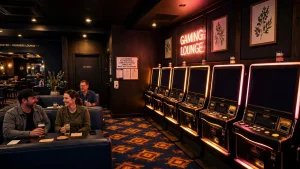
This age requirement concerns gambling, not simply the name or location of a venue. A search for a club in the CBD does not establish that it has gaming machines, and it does not tell you whether you are eligible to gamble there. Keep those questions separate: confirm venue details directly, but do not treat a listing, membership status or invitation as an exception to the legal age rule.
If you are under 18, you cannot legally gamble on pokies. The rule also applies to online pokies, so changing from a physical venue to a website does not change the minimum age. If you are an adult, the age threshold only establishes that you meet the minimum legal age; it does not verify what a particular club offers or settle any separate conditions that may apply to entering or using its facilities.
For parents, carers and other adults accompanying younger people, avoid assuming that a club’s general activities make gambling areas suitable for them. The key point is limited but clear: anyone under 18 must not take part in gambling. If you are unsure whether a venue’s arrangements are appropriate for a young person, ask the venue about its access rules rather than relying on a general description.
Searches for Canberra CBD pokies or club gaming can return mixed information, but age eligibility is not a venue-by-venue variation. The minimum remains 18. This applies regardless of which club you are considering, whether you are visiting with other people or whether the machines are described as pokies, gaming machines or another term. Do not use a venue listing to infer that a younger person may gamble, and do not treat online access as a workaround.
Parkes Searches and the Limits of Available Venue Information
A reference to Parkes alongside Canberra pokies does not, by itself, tell you which venue is meant or what machines are available there. Listings can be incomplete, outdated or unclear about whether a place name refers to a venue, an area or something else. Before relying on a listing, confirm the venue’s identity and ask it directly which gaming machines it has. Do not treat a machine name or photograph as proof that it is currently available.
The same care applies to claims about how a machine performs. A description suggesting that a pokie has recently paid out, or is “due” to pay, cannot predict the result of your next spin. Each spin is a separate event determined by a Random Number Generator. Previous outcomes do not change that independence or establish what will happen next.
That distinction matters when you see stories about a run of wins, a machine that has been quiet, or a supposed pattern in recent results. Such accounts describe past events, not reliable signals about future ones. A sequence that looks meaningful can still be followed by any result the game’s random process permits; watching or waiting does not make a particular outcome more likely.
If a venue or machine cannot be clearly identified, pause before making plans around it. Confirm the details with the venue rather than relying on a third-party description, and treat performance claims as commentary, not a forecast. This will not tell you what a machine will pay; it helps keep uncertain venue information and random outcomes in perspective.

Cashless Payments and Canberra-Related Searches
When you see a reference to cashless pokies in Canberra, separate the payment method from the venue or service being described. PayID is a way to route a bank transfer using an alias, such as an email address, mobile number or ABN. It operates through the New Payments Platform (NPP); it is not a gambling account or a check on who receives the money.
That distinction matters if a payment option appears alongside claims about pokies. Paying by PayID does not establish that a gambling service is lawful, that a game is fair or that its return percentage is accurate. A payment method tells you how funds may be transferred, not whether the recipient’s claims deserve trust.
Bank handling can also vary. A specialist review reports that some Australian banks, including members of the Big Four, sometimes block PayID transfers to gambling merchants they recognise. A declined transfer does not by itself explain the bank’s decision. If this affects you, contact your bank through its official channel rather than trying to route around a restriction.
Searches that combine Canberra with Newcastle can also blur two different location references. Do not treat a shared phrase or a payment label as evidence that a particular venue exists in either place, or that it accepts cashless payments. Confirm the venue’s identity and payment arrangements directly through reliable, current information before making plans.
For any transfer, check the recipient details carefully before authorising it. PayID’s alias system is designed to direct a payment, but entering an alias is not a substitute for confirming who controls it. If the details do not match the recipient you intend to pay, pause and verify them with your bank. Payment convenience should never be taken as reassurance about a gambling service.
Are online pokies legal for Australian players?
Yes, Australian players can play on offshore sites that accept them, but offering real-money online pokies to Australians without a domestic licence is illegal for operators, and no Australian-licensed online casino exists. If an offshore casino refuses to pay, you have no legal recourse in Australia.
What is the legal age for online gambling in Australia?
You must be at least 18 years old to gamble online in Australia.
Can casinos change the RTP of their games?
Yes, some game providers let casinos choose between RTP settings for the same game. Check the published RTP for the exact game version and setting at that casino.
What does “wagering requirement” actually mean?
It is the amount you must bet before bonus winnings can be withdrawn, usually calculated as a multiplier. For example, a $500 bonus with a 40x requirement means you must place $20,000 in bets before withdrawing winnings.
Are online pokies rigged?
Each spin is an independent random event determined by a Random Number Generator, so previous wins or losses do not determine the next result.