
Understand the risks before sending SOL offshore
A practical guide to offshore operator rules, SOL transfers, casino terms, cash-outs and the limits of player protection in Australia.
What Australian Players Need to Know About Offshore Solana Casinos
You can legally buy, hold and transfer SOL in Australia. That does not make every use of it lawful, however. Sending SOL to an offshore casino involves a different issue from owning or transferring the token: the service receiving it may be prohibited from offering online casino gambling to people in Australia.
The Interactive Gambling Act 2001 prohibits overseas operators from providing online casino services to Australian residents. The restriction covers real-money casino-style gambling, rather than being avoided because a site uses cryptocurrency or calls itself a Solana casino. A platform’s offshore location, its payment method and any claims it makes about its status do not remove that prohibition.
The law’s focus is the operator, not the individual Australian player. That means players are not directly penalised under the Act simply for using an offshore casino. But “not directly penalised” is not the same as “legally safe.” It does not make the operator’s service lawful in Australia, nor does it give you a reliable way to recover funds if something goes wrong. You should not take the distinction as an assurance that an offshore site is authorised to serve you.
Casinos listed by licence
If you’re looking for a Solana casino in Australia, use this list as a starting point for checking the details that are available. The information here does not confirm Solana support, so verify that directly with a casino before depositing.
-
GoldenCrown
- License
- Curacao Gaming Control Board OGL/2023/176/0095 (Hollycorn N.V.)
GoldenCrown is listed with a Curacao Gaming Control Board licence, OGL/2023/176/0095, held by Hollycorn N.V.
-
SkyCrown
- License
- Tobique Gaming Commission
- Payout speed
- crypto ~10-15 minutes, fiat 1-5 days
- Min. deposit
- A$30
SkyCrown is listed with a Tobique Gaming Commission licence. Its stated payout times are around 10–15 minutes for crypto and 1–5 days for fiat, with a minimum deposit of A$30.
-
Playfina Casino
- License
- Curacao eGaming (Hollycorn N.V., since 2017)
- Min. deposit
- A$20-30 (depends on the offer)
Playfina Casino is listed with a Curacao eGaming licence held by Hollycorn N.V. since 2017. Its minimum deposit is A$20–30, depending on the offer.
-
JustCasino
- License
- Curacao Gaming Control Board
JustCasino is listed with a Curacao Gaming Control Board licence.
-
JeetCity Casino
- License
- Curacao eGaming (Dama N.V.)
JeetCity Casino is listed with a Curacao eGaming licence held by Dama N.V.
-
DragonSlots Casino
- License
- Curacao Gaming Authority (Jumpman Gaming Ltd)
DragonSlots Casino is listed with a Curacao Gaming Authority licence held by Jumpman Gaming Ltd.
-
Lucky Dreams
- License
- Curacao
- Min. deposit
- A$20 (POLi)
Lucky Dreams is listed as Curacao-licensed. Its stated minimum deposit is A$20 via POLi.
-
SpinsUp
- License
- Curacao Gaming Control Board OGL/2023/174/0082 (Dama N.V.)
SpinsUp is listed with a Curacao Gaming Control Board licence, OGL/2023/174/0082, held by Dama N.V.
-
Wild Tokyo
- License
- Curacao
- Payout speed
- crypto 30-60 minutes, fiat 1-5 days
- Min. deposit
- A$10
Wild Tokyo is listed as Curacao-licensed. Its stated payout times are 30–60 minutes for crypto and 1–5 days for fiat, with a minimum deposit of A$10.
-
Vegaz Casino
- License
- Curacao OGL/2024/1335/0780
- Min. deposit
- EUR 20
Vegaz Casino is listed with a Curacao licence, OGL/2024/1335/0780. Its stated minimum deposit is EUR 20.
There is also a practical difference between having SOL in your own wallet and placing it with a casino. When you hold or transfer SOL yourself, you control the asset. Once it is sent to an offshore operator, access to the funds depends on that platform and its decisions. If the operator freezes your account or refuses to release winnings, Australian law does not provide you with legal protection against that outcome. You may have no effective route through Australian authorities to make the operator return the funds.
This matters even if a site appears professional or says it accepts Australian customers. A website’s own statement is not proof that it can lawfully provide casino services here. Nor should you read the absence of direct penalties for players as approval from the Australian government. These are separate questions: the Act places the prohibition on operators, while the player still faces the financial and practical risks of using a service outside Australia’s protections.
A specialist review reports that no specific Australian licensing framework for crypto-gambling operators had materialised by mid-2026. That point should not be mistaken for a gap that makes offshore casino services acceptable. The central restriction remains: overseas operators are prohibited from offering online casino services to Australian residents.

Australian Communications and Media Authority enforcement also affects access. ACMA can block unlicensed offshore gambling websites, so a site that opens today may not remain accessible. A blocked site or interrupted connection can complicate access to an account, but does not create a right to withdraw funds or a local remedy if the operator withholds them. Using a VPN to get around a block may expose you to further account problems, including seizure of funds.
Before you consider sending SOL to an offshore platform, keep these points distinct: buying and holding SOL is lawful; the operator is prohibited from providing online casino services to Australian residents; and players are not directly penalised under the Act merely for playing. That last point is not protection. Offshore gambling is not legally safe simply because the law targets operators, and if funds are withheld, you should not expect Australian legal protections to resolve the dispute.
How Deposits and Play Work When a Casino Uses Solana
The route from Australian dollars to a balance at an online casino that accepts SOL generally has two parts: buying the cryptocurrency through an exchange, then sending it from there to a casino wallet. Most platforms of this kind do not take AUD directly by bank transfer or credit card. The casino balance is therefore funded with cryptocurrency rather than by paying the operator in Australian dollars.

That payment route does not make the service lawful in Australia. The Interactive Gambling Act 2001 prohibits offshore operators from providing online casino games to people in Australia. Although the law targets operators rather than directly penalising individual players, using an offshore casino is not legally safe. Australian consumer protections may not help if the operator withholds funds or closes the account.
From AUD to SOL
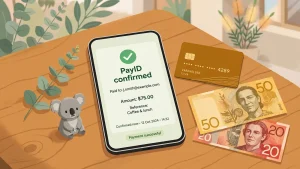
Start by choosing an Australian exchange that supports AUD funding and SOL purchases. Swyftx, CoinSpot and Coinbase AU accept AUD deposits through PayID or bank transfer. The exact account setup and payment steps depend on the exchange, but the general sequence is to fund your exchange account in AUD and use those funds to buy SOL.
An exchange is a conversion service, not simply a route around identity checks. Services that convert between SOL and AUD are subject to KYC/AML requirements. You may need to provide identity details and satisfy the exchange’s checks before buying or transferring cryptocurrency. Allow for those checks when considering how the route works; do not assume that a crypto payment means you can avoid them.
Once the SOL purchase is complete, the exchange account holds the cryptocurrency. It is not yet in the casino account. To move it, you would need to open the casino’s deposit area, select SOL if that option is available, and follow the displayed instructions for funding the account.
Sending SOL to a casino wallet
A casino deposit page may display a wallet address for the selected token. The address is where the transfer is directed; it is not an AUD bank account number. You would enter or paste that address in the exchange’s withdrawal flow, specify SOL as the asset, review the details and submit the transfer. The casino can credit a balance after the incoming payment has been recognised.
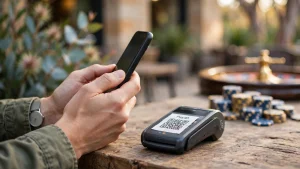
Treat the address and asset selection as critical details. Sending SOL to the wrong address can result in permanent loss, because blockchain transfers are irreversible. Do not rely on a previous address or a saved payment screen without checking the current instructions. If the casino’s deposit page and the exchange do not clearly match on the asset and destination, pause rather than guess.
The exchange and casino are separate services. A completed withdrawal from the exchange does not itself prove that the casino has credited the funds, and a displayed casino balance does not change the legal status of the operator. Keep records of the exchange purchase and transfer, including the transaction details available in your account. They can help you understand what happened if a payment is delayed or disputed, but they cannot guarantee recovery.
Some platforms may also accept a stablecoin such as USDC on Solana. That is a separate asset choice, not another name for SOL. If an option is shown, check the casino’s deposit instructions and the exchange’s withdrawal details carefully before sending anything. A token and its network must correspond with the destination instructions; selecting an apparently similar option is not a safe substitute.
What happens once a balance appears
After a deposit has been credited, the platform may show an in-site balance that can be used for its gambling services. The interface can make this feel like an ordinary online account, but the funds remain tied to a cryptocurrency transfer and an offshore operator. Avoid treating a successful deposit as confirmation that future account access or any request to release funds is assured.
Read the casino’s own deposit conditions before transferring money, including any instructions about accepted assets and how deposits are credited. Keep in mind that an offshore operator has no Australian licence to provide online casino games to residents under the Interactive Gambling Act 2001. ACMA blocks unlicensed gambling websites, and a site being reachable at a particular moment does not make it authorised or protected.
Using a VPN to bypass access restrictions may breach a platform's terms and lead to account seizure or loss of funds.
If a site asks you to use a VPN to get around access restrictions, do not assume that doing so protects your account. A VPN may breach the platform’s terms and can lead to account seizure and loss of funds. The same practical caution applies to any transfer: do not send more than you can afford to lose, and do not proceed if the destination or process is unclear.
How to Assess a Solana Casino Without Relying on Its Claims
A polished site can describe itself as trusted, fair or among the best Solana casinos. Those labels are not evidence. Before you consider any offshore operator, separate what it says from what you can check—and keep Australia’s legal position in view: the Interactive Gambling Act 2001 prohibits overseas operators from offering online casino games to people in Australia. An offshore licence does not make that offer lawful here.
The Act targets operators, not individual players, so Australian players are not directly penalised simply for using an offshore casino. That does not make the arrangement legally safe. If an account is frozen or winnings are withheld, you have no legal protection under Australian law in that dispute. The Australian Communications and Media Authority (ACMA) also blocks unlicensed offshore gambling websites and maintains a public Gambling Prohibition Register. A site being reachable at one moment is not proof that it is authorised to serve Australians.
Check what a licence does—and does not—show
Look for the legal entity named in the operator’s terms, the regulator it says issued its licence, and a licence number or register entry that can be checked directly with that regulator. Compare the entity and domain shown on the regulator’s records with the ones on the casino site. A badge or licence image on a landing page is only a claim if you cannot confirm it independently.
Treat this check as a way to understand who claims to oversee the operator, not as a safety certificate for Australian play. Australia does not permit offshore operators to provide online casino services to residents, and an overseas licence does not override that rule or give you Australian consumer protections. If the operator’s identity is difficult to establish, or its terms name a different company from its promotional pages, you have little basis for judging who would be responsible for a dispute.
Do not use a VPN to get around access restrictions. A platform may treat that as a breach of its terms, with the risk that an account is seized and funds are lost. A change in apparent location cannot create Australian legal protection.
Look for evidence behind fairness claims
RTP is a theoretical return figure for a game over extended play, not a promise about what you will receive in a particular session. Check whether the figure is attached to the specific game version and whether it can be corroborated through the game provider or another identifiable source. A site-wide RTP claim that does not identify the games it covers is difficult to assess.
For a “provably fair” claim, look for an explanation of what data is used, how a result can be checked, and what steps you would take to verify a completed round. Technical language alone is not enough: the verification process should be accessible and should let you compare the stated inputs with the result. If the explanation is absent, or the site asks you to accept fairness on trust, treat the claim as unsubstantiated.
- Identify the legal entity and regulator named in the terms
- Check the licence number directly with the official regulator
- Verify if the RTP figure is attached to the specific game version
- Look for an accessible process to verify "provably fair" results
These checks can help you understand the operator’s statements; they cannot remove the risk of playing with an offshore service. Even a result that can be verified does not establish that the operator will honour a withdrawal.
Read the cash-out rules before depositing
Find the withdrawal terms before you send funds. Check whether the operator can request identity documents, what conditions apply to a withdrawal, whether it can hold or cancel a payout, and what fees or limits the terms describe. Make sure the rules apply to the casino and payment method you would use, rather than relying on a general FAQ or a customer-support reply that is not reflected in the formal terms.
Pay particular attention to KYC policies. The site should say when it may request documents and how account checks affect withdrawals. Larger withdrawals or bonus cashouts may trigger KYC checks requiring ID verification. If the policy is unclear, assume that a withdrawal could be delayed while the operator reviews your account; do not wait until after a win to discover what evidence it wants.
Bonus conditions need the same scrutiny. A specialist review may assess a bonus’s effective value by considering playthrough, game contribution, time limits and maximum cashout caps. Those details can materially change whether a promotion is useful to you. Read the operator’s own terms, including any rules that apply to winnings, before accepting an offer. The next consideration is not just the advertised bonus amount but the conditions attached to it.
Judge the record, not the label
Compare an operator’s public terms with the information it gives during account registration and support enquiries. Look for specific, consistent answers about the licence it claims, fairness verification and withdrawal KYC. Save copies of the terms in force before depositing; a promotional banner is not a substitute for the rules that govern your account.
If a site relies on broad assurances while leaving key policies vague, that is a practical reason to stop. No comparison label can promise a safe outcome: offshore platforms offer limited consumer protection, and Australian authorities cannot provide recourse if funds are withheld or the platform closes. Treat promotional links as advertising, not independent evidence; any affiliate or promotional link should be clearly identified as such.
Solana Slots and the Wagering Rules Behind Free Spins
A slot bonus can come with more than one condition. The key distinction is between a game’s contribution towards a wagering target and the separate rules attached to bonus funds. Treating these as the same thing can make an offer look easier to clear than its terms allow.
A slot’s contribution rate determines how much each qualifying bet counts towards the wagering requirement. Slots are commonly assigned a 100% contribution, while blackjack and roulette may count for only 10–20%. That describes how play is counted; it does not tell you how much you must wager, whether the bonus is eligible, or what conditions apply to winnings.
Free spins can have their own path. A specialist review describes an arrangement in which winnings from free spins are credited as bonus funds and carry a separate wagering requirement, such as 50x. That is one reported condition, not a rule that applies to every offer. Read the specific terms to find out whether the spins produce withdrawable cash or bonus funds, and whether those funds must be wagered before they can be withdrawn.
If a bonus balance is subject to wagering, playing slots may count towards that requirement at the stated contribution rate. But a 100% contribution does not remove the requirement or guarantee that you will complete it. The funds may still be governed by separate conditions, and the operator’s terms determine which bets qualify. Check whether the wagering target applies to the bonus, the winnings, or another stated amount; do not infer the calculation from the phrase “free spins”.
Before accepting a slot promotion, look for the rule that explains what happens after a spin pays out. Check whether the win is placed in a cash balance or a bonus balance, whether another wagering condition follows, and which games count towards it. If the terms do not make those points clear, you cannot reliably judge what the displayed prize means for withdrawal.
The distinction matters when comparing slot offers on Solana casino sites: the network used for payment does not define the bonus rules. Those rules are set by the operator, and they can affect whether winnings remain restricted after the spins end. Read the conditions before activating an offer rather than relying on its headline or the number of spins.
There is also a legal boundary in Australia: under the Interactive Gambling Act 2001, offshore operators are prohibited from providing online casino games, including slots, to Australian residents. An explanation of bonus mechanics should not be mistaken for a recommendation to use such a service. If you encounter an offer, its wording can still be assessed carefully, but the presence of a slot promotion does not make offshore play legally safe for you.
What “NFT Casino” Means When You’re Looking at Solana
The phrase “NFT casino” can suggest that a casino uses non-fungible tokens as part of its games, rewards or account features. But the label by itself tells you very little. An NFT is a distinct digital token; its presence in a platform’s branding would not, on its own, show what the token does or whether it is connected to playing.
Keep the idea of an NFT feature separate from the choice of payment token. A casino that accepts SOL is using Solana’s native cryptocurrency for payments. That does not mean it offers NFT-based games, lets you use NFTs as stakes, or gives them any role in rewards or account access. Those are separate claims and should not be inferred from the platform’s use of the Solana network.
The same distinction applies to wording such as “Solana casino NFT.” It could refer to an NFT feature, an NFT-themed promotion or simply a site that accepts Solana-based tokens. Without clear, specific information about what an NFT is meant to do, the wording is not enough to establish that a casino has a functional NFT product. Avoid treating images of digital collectibles or broad references to Web3 as proof of a usable feature.
Payment support can also extend beyond SOL. A specialist review reports that some Solana-based casino platforms accept USDC on Solana for deposits and play as well. USDC is a token on the Solana network, but accepting it is a payment detail—not evidence of NFT functionality. Check the platform’s own payment information to see which token and network it supports; token names alone do not confirm that the transfer route is correct.
If a site claims that NFTs unlock benefits, look for a plain explanation of the mechanism: what the token does, whether you need to hold or transfer it, and whether the feature changes how funds or rewards are handled. Read the relevant terms before acting. A claim that an NFT provides access or value should not be treated as a guarantee that you can sell it, withdraw value from it or use it elsewhere.
For a casino with Solana payments, the practical question is which supported token the platform accepts. The separate question is whether it has an NFT feature with a clearly described purpose. Keeping those questions apart helps you avoid confusing a payment method with a product feature, or assuming that a name implies functionality.
Crypto Gambling, SOL Price Changes and Australian Tax
A win shown in SOL is not the same as a fixed amount of Australian dollars. SOL’s market value can move between the time you fund an account and the time you later value or use the balance. A winning balance may therefore be worth less in AUD even if the number of SOL has not changed. Treat the token’s price risk as separate from the result of a bet: a favourable gambling outcome does not protect you from a fall in SOL’s value.
Australian tax treatment also involves two distinct questions. Recreational gambling winnings are generally not taxable in Australia. However, cryptocurrency is treated by the Australian Taxation Office (ATO) as an asset for capital gains tax purposes. That means profits connected with gambling using SOL may have capital gains tax consequences, even where the gambling winnings themselves would generally not be taxed as ordinary income.
Keep records that let you distinguish the gambling result from changes in the token’s value. You may need to establish what SOL was worth when it was acquired, used or later disposed of, as well as the relevant transactions and their dates. Do not assume that a casino’s displayed balance or a transaction history alone settles your tax position; the treatment can depend on your circumstances.
Losses are not automatically available to reduce other taxable gains. A specialist tax commentary notes that gambling losses can be offset against gains only where the person is regarded as a professional gambler, a status that is difficult to establish. Recreational players should not treat losses as a deduction simply because they were incurred while trying to win.
If you use a Solana-based crypto casino, consider the possibility of both a gambling loss and a change in SOL’s AUD value. Those are separate financial effects, and the tax treatment of one does not necessarily determine the treatment of the other. Keep clear transaction records and seek advice from a qualified Australian tax professional if you are unsure how your activity should be reported.
Dice Play and the Terms That Can Shape a Bonus
A search for dice play at a Solana casino can lead you to bonus terms that matter more than the game label. No particular dice game or offshore site should be assumed to be available to Australian residents. If you are reviewing a promotion, read its wagering rules before depositing; the headline bonus does not tell you how much play may be required before any winnings can be withdrawn.
A specialist review describes a wagering condition of 35x that applies to the bonus only. That wording is important: the multiple is calculated against the bonus amount, not automatically against the bonus plus your deposit. But a stated multiple cannot be interpreted safely without the operator’s full terms. Check which balance the requirement uses, which bets count, whether any games are excluded, and when the requirement must be completed.
Do
- Check the explicit contribution table for dice games
- Read the full bonus rules alongside withdrawal terms
- Confirm if dice wagers qualify for wagering requirements
Don't
- Assume a low wagering multiple makes a bonus easy to clear
- Infer wagering calculations from the phrase "free spins"
- Rely on a promotional banner instead of formal terms
Dice-related wording does not settle those details. If a bonus is restricted to particular games, or if some bets contribute less than others, the balance shown in your account may not reflect progress at the rate you expect. Look for an explicit contribution table and confirm whether dice wagers qualify before relying on them to clear a bonus. If the terms are unclear or use conflicting definitions, treat the promotion as uncertain rather than assuming the most favourable reading.
Also check what happens to the bonus if you stop playing or try to withdraw early. A promotion may have conditions on the bonus balance and on winnings generated from it. The key point is that “35x on the bonus” describes the calculation base; it does not, by itself, explain every restriction attached to play or cash-out.
Before depositing, read the full bonus rules alongside the withdrawal terms, and keep a copy of the wording that applies when you opt in. Do not infer that a low-looking multiple makes a promotion easy to clear, or that a dice game will count in full. If you cannot establish how the condition applies to your intended play, declining the bonus avoids taking on an obligation you cannot assess. The value of a promotion depends on its precise terms, not just the number displayed beside it.
Casino Games, Playthrough and the Real Cost of a Bonus
A bonus is not the same as cash you can withdraw. If winnings come from bonus funds, they must be wagered with real money before they can be withdrawn. The total amount you have to bet, and how much each game counts towards that total, determine how much play may be needed to meet the requirement.
Check the wording carefully. A wagering multiple may apply to the bonus amount, while eligible bets contribute differently depending on the game category. Slots may count in full towards playthrough, whereas table games may count for only a fraction. That means the same amount wagered can clear more of a requirement on one category than another. A game’s contribution rate is a term to verify, not something to infer from its name or format.
One specialist review gives a 40x requirement on a 5 SOL bonus as an example: the player must place 200 SOL in bets before withdrawal. That figure is total turnover, not a request to deposit or lose 200 SOL. But it is still a substantial amount of wagering relative to the bonus, and the balance can fall while you play. The example should not be taken as a standard offer; the terms of each bonus determine the actual requirement.
Contribution rules can extend the effort further. If a category contributes only a small share of each bet, you may need far more total wagering in that category to satisfy the same playthrough. A headline bonus can therefore look more generous than it is in practice, particularly when the games you intend to play count less towards the requirement.
There is also a cost to wagering: games have a house edge, so repeated betting can reduce your balance. A high playthrough requirement combined with that edge can make a bonus effectively negative in value. You might complete the required turnover and still have little or nothing left to withdraw. The bonus amount alone does not tell you whether the offer is worthwhile.
Before accepting a bonus, calculate the required turnover from its stated base and multiple, then check which game categories count and at what rate. Read any maximum cashout cap and time limit as well. If the terms do not make the calculation clear, do not treat the advertised bonus as withdrawable value.
SOL and Other Tokens: Fees, Minimums and Transaction Speed
SOL is the native token used to pay fees on the Solana network. When a platform accepts SOL, a transfer involves more than the casino interface: the network must confirm the transaction, and the platform must recognise the incoming funds. A specialist review puts Solana confirmation time at about 400 milliseconds, with the displayed balance updating immediately after confirmation. Treat that as a description of network behaviour, not a promise about how quickly an offshore operator will credit a deposit or process a withdrawal.
Network fees are separate from any charge set by a platform. The average Solana transaction fee is reported at US$0.00025 per transaction, making the network component close to zero. That does not mean every movement of funds is free: an operator may set its own conditions or charges, and the amount reaching your account can depend on those terms. Check the displayed amount and any fee information before you confirm a transfer.
Deposit minimums are also set by the platform, rather than by Solana itself. A specialist review reports minimum SOL deposits ranging from 0.01 to 0.1 SOL, equivalent to approximately A$2.80–A$28 at April 2026 prices. Because SOL’s value changes, that Australian-dollar comparison is tied to that date; the same token amount can represent a different AUD value later. A low minimum does not make a transfer risk-free or establish that a platform is suitable for Australian residents.
Before sending SOL, compare the deposit address and the selected network with the details shown in your wallet. Blockchain transfers are irreversible: if you send funds to the wrong address, they cannot be recovered. A quick confirmation only means the network has recorded the transaction; it does not provide an Australian route to recover funds if an offshore operator withholds them.
These figures describe payment mechanics, not permission to use an offshore casino. Under the Interactive Gambling Act 2001, offshore operators are prohibited from offering online casino services to people in Australia. A fast, low-cost Solana transfer does not change that legal position or provide Australian consumer protection.
Cash-Out Timing, KYC Checks and the Risk of Irreversible Transfers
A quick Solana confirmation does not mean a casino has approved or sent your withdrawal. The operator must process the request first, and its checks, internal queue and network congestion can all add time. A specialist review describes native SOL withdrawals as taking 30–60 seconds on competent platforms, but that is not a guarantee for your request. Another specialist review sets under 10 minutes as a fast network withdrawal benchmark. Casino processing can take longer: reported ranges run from 5–15 minutes for automated processes to as long as 72 hours when handled manually.
Check the cash-out terms before depositing, including processing times, any platform fee and the conditions that can delay or restrict a payout. Some operators charge a withdrawal fee; a specialist review gives a range of 0.1% to 1%. Larger withdrawals or a cashout involving bonus funds may trigger KYC checks and a request for identification, so read the operator’s policy before your balance is at stake.

Check the destination address carefully before sending SOL. Transfers cannot be reversed; if you send funds to the wrong address, they may be lost permanently. A casino’s own payout may also be delayed or withheld, and a fast network cannot make the operator release funds.
For Australians, offshore operators are prohibited under the Interactive Gambling Act 2001 from providing online casino services to residents. Using one is not legally safe simply because individual players are not directly penalised. Offshore platforms offer limited consumer protection, with no Australian legal recourse if funds are withheld or the site closes. Using a VPN may also lead to account seizure and loss of funds.
What fees, limits, and speeds apply to SOL casino deposits?
A Solana transaction averages about US$0.00025 in network fees, and typical minimum deposits range from 0.01 to 0.1 SOL (about AUD$2.80–$28 at April 2026 prices). Deposits confirm in about 400 milliseconds; casinos may add their own fees, and withdrawal fees can range from 0.1% to 1%.
What is the minimum deposit for a Solana casino?
Typical minimums range from 0.01 to 0.1 SOL, approximately AUD$2.80–$28 at April 2026 prices.
How does ACMA protect Australian online gamblers?
ACMA blocks unlicensed offshore gambling websites and maintains a public Gambling Prohibition Register. This can restrict access to a site, but it does not protect your funds or provide a way to recover money withheld by an offshore casino.
How do I play at Solana online casinos from Australia?
The usual payment route is to buy SOL with AUD through an Australian exchange, then send it to the casino’s displayed SOL wallet address. However, the Interactive Gambling Act prohibits overseas operators from offering online casino services to Australians, and using one does not provide Australian legal protection if funds are withheld.
How do Solana casino deposits and withdrawals work?
For a deposit, you buy SOL on an exchange and send it to the address shown in the casino’s deposit area; the casino credits your balance after recognising the transfer. Withdrawals may take 5–15 minutes with automated processing or up to 72 hours when handled manually, while a fast network withdrawal should take under 10 minutes.
How does a Solana casino work?
You fund a casino account by sending SOL to its wallet, then use the credited balance to play. Solana transactions confirm in about 400 milliseconds, but access to funds after they reach an offshore operator depends on that platform; Australian law does not protect you if it freezes your account or withholds winnings.