
Millioner Payments in Australia: AUD, PayID and Deposits
 Available in US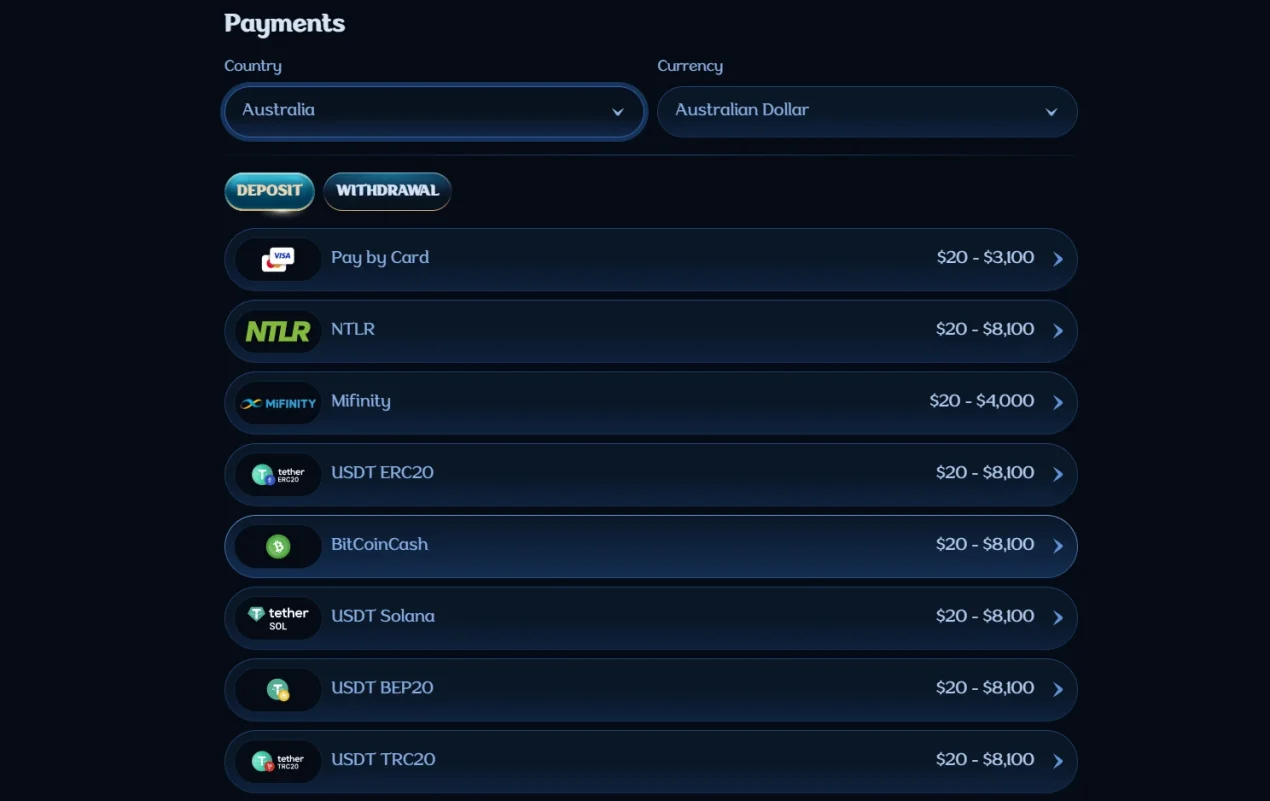
Content
Millioner supports an Australia-targeted site surface and its official terms include AUD in the withdrawal-limit table, so Australian-dollar account values are part of the published framework. That is separate from the question of which deposit rails appear in a particular cashier session. Two independent brand-specific sources list PayID for Millioner, and separate sources support card and crypto payment options. Because cashier methods can change by account and session, the live cashier remains the final check before choosing a deposit route.
Three different questions: AUD, payment rails and regulation
Payment pages often become confusing because they combine currency support, payment-method availability and Australian gambling rules into one claim. They should be treated separately. First, Millioner’s official terms contain a dedicated AUD row in its withdrawal table. Second, independent Millioner-specific sources identify methods such as PayID, cards and crypto. Third, Australian regulatory rules apply differently depending on the type of gambling service and provider.
For a reader deciding how to fund an account, the useful sequence is simple: confirm the account currency, open the cashier, check which methods are actually displayed for that account, then compare fees, processing information and any method-specific limits shown there. Do not infer cashier availability solely from a logo in a footer or from a generic payments article.
AUD support appears in the official terms. PayID is reported for Millioner by brand-focused sources but still needs a live cashier check, while cards and crypto are supported payment categories. Exact deposit minimums, maximums and method fees should be taken from the live cashier when shown.
AUD support: what the official terms actually show
The strongest Australia-specific payment evidence is Millioner’s own General Terms and Conditions. The current withdrawal-limit table includes AUD alongside EUR, NOK, NZD, CAD, USD and other currencies. At Level 1, the table lists A$800 per day and A$10,500 per month, with higher limits shown for higher VIP levels.
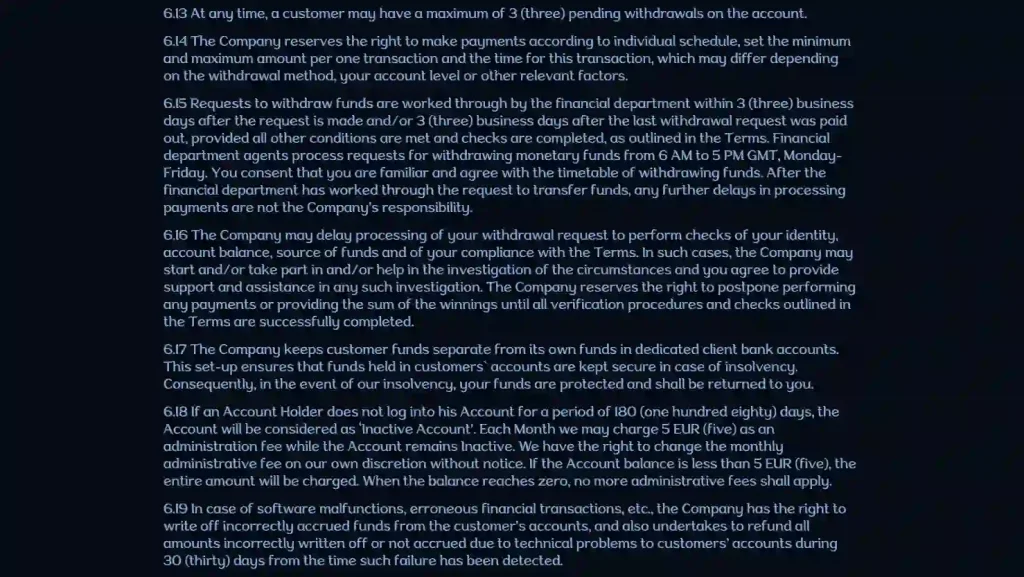
Those numbers are withdrawal limits, not deposit limits. They should not be reused as a statement about how much can be deposited by card, PayID or another rail. Millioner’s terms also say that payment processing can depend on account level and other factors. For detailed cash-out mechanics, use the dedicated Millioner withdrawals guide.
The presence of AUD in official terms is valuable because it is direct evidence that Australian-dollar figures are contemplated in the account and withdrawal framework. It is still sensible to verify the currency shown during registration and in the cashier before funding an account.
PayID and why it matters in Australia
PayID is especially relevant to Australian readers because it is a mainstream account-to-account payment method. The Reserve Bank of Australia’s 2025 Consumer Payments Survey found that around 50% of respondents had used PayID at least once in the previous year, up from 32% in 2022. The RBA describes PayID as a service that lets consumers pay using identifiers such as a mobile number, email address or ABN rather than entering traditional bank-account details.
For Millioner specifically, two independent brand-focused sources list PayID. That supports PayID as a reported Millioner payment option. However, a payment method can be conditional on location, account configuration or current cashier routing. The practical advice is therefore direct: if PayID is the reason you are considering Millioner, register first, open the cashier and confirm that PayID is displayed before planning around it.
PayID’s appeal is straightforward. It is familiar to many Australian bank customers, it avoids manually entering a BSB and account number for many transfers, and the recipient name can be shown before a payment. Those are general characteristics of PayID documented by the RBA, not Millioner-specific promises about transaction speed or fees.
Cards remain the Australian baseline
Cards continue to dominate Australian consumer payments. The RBA’s 2025 survey found that cards accounted for about 73% of consumer payments, with debit cards alone representing about 49%. That makes card support an important practical benchmark when evaluating any online payment experience aimed at Australian users.
Independent sources support card payment options at Millioner, and the public Millioner site also displays payment-partner branding for Visa and Mastercard on some regional surfaces. A card logo should still be treated as a category indicator rather than a guarantee that every Australian account will see the same card route at every moment.
If cards are available in your cashier, compare the information presented at the payment step before depositing. Look for the currency, any fee disclosure, minimum or maximum amount, and whether the card is being processed as a standard purchase or through another payment flow. No fixed card fee or limit is stated because current official Millioner material does not provide one.
Crypto payment options
Independent sources also support crypto payment options at Millioner. That is useful for readers who already use digital assets, but it should not be turned into a generic recommendation. Crypto payments introduce additional questions around asset selection, exchange-rate exposure, network fees and wallet handling that do not arise in the same way with an AUD bank transfer or domestic card payment.
Millioner’s current registration surface includes crypto-denominated welcome-offer choices, which is another observable sign that cryptocurrency is integrated into the product. The exact coins available in the cashier should still be checked directly because supported assets can change.
For Australian context, the RBA’s 2025 survey found that cryptocurrency awareness was high but actual use as a payment method remained low, at around 2% of respondents in the previous year. That contrast is useful: crypto may be an available Millioner option, but it is not a mainstream Australian consumer-payment rail in the way cards or PayID are.
What about bank transfer and other methods?
Millioner’s public surfaces reference payment partners, and third-party reviews describe a wider method set. Because payment menus change frequently, only currently supported categories should be relied on; logos or historical lists can be outdated.
If the cashier shows a bank-transfer option, evaluate it on the actual terms displayed for your account. The same applies to e-wallets or alternative payment services. A method that is common in another Millioner market may not be offered on an Australian account, while a method available today can be replaced by a different processor later.
The most reliable picture combines AUD figures in the official terms with reported PayID, card and crypto support. Anything more granular should be confirmed in the live cashier.
Do not confuse Australian payment rules with Millioner cashier facts
Australian gambling regulation is complex, and payment restrictions for locally licensed wagering services should not be copied automatically into a casino cashier review. A rule applying to a regulated wagering provider does not by itself prove that a specific payment method is available or unavailable at Millioner.
No specific Millioner deposit method should be described as banned by an Australian rule without a direct basis. Likewise, the presence of PayID, cards or crypto does not demonstrate Australian licensing or regulatory approval. Product payment facts and licensing facts are kept separate.
For regulatory context, see the Millioner licence in Australia section. For payments, the practical questions are which currency and payment rails are available and what the live cashier shows before money is sent.
A practical deposit checklist
- Confirm the account and cashier currency before entering an amount.
- Check whether PayID, card or crypto is actually displayed for your account.
- Read any fee and limit information shown at the transaction step.
- Use the exact recipient details displayed in the cashier for account-to-account transfers.
- Keep records of deposits and any payment reference numbers.
- Before depositing, review withdrawal requirements so the preferred funding method does not create an unexpected cash-out constraint.
The last point is important. Depositing is only half of the payment journey. Millioner’s terms allow payment handling to vary and include VIP-based withdrawal limits, so a convenient deposit method is not automatically the best overall method for someone who expects to withdraw regularly.
How payments connect to registration
The cashier is account-specific, so registration is the point where generic payment claims become practical. The Millioner account setup guide explains the registration flow and account considerations. Once logged in, compare the available cashier methods rather than assuming that every method listed by an external review is currently enabled.
This is also the right stage to confirm whether the account is set to AUD and whether the payment rail you prefer is supported in that currency. If a preferred method is absent, do not force a transfer through details found elsewhere on the internet. Use only the payment instructions presented inside the authenticated cashier.
How Millioner payments compare for Australian use
Official terms confirm AUD figures in the withdrawal framework. Two independent Millioner-specific sources report PayID, while other independent sources report card and crypto options. In the Australian market, those categories are meaningful because cards dominate everyday payments and PayID is widely used.
The live cashier still has the final word on the exact method list for an individual account. The Millioner registration guide also explains the account setup that comes before cashier use. Check it before depositing, especially if PayID is your preferred route. For the wider assessment of the casino, return to the Millioner Australia review.
This material was created by the Millioner Australia Guide team.
Related posts

Millioner Casino Reputation and Complaints
Millioner Withdrawals: Limits, Times and Verification